


Happy dog in Halloween costume on Boise front porch with pumpkins

Halloween dog safety in Boise is more important than ever with all the spooky excitement around town. Follow these tips to keep your pup calm, safe, and stress-free this season.

Halloween Candy Hazards for Dogs

Chocolate, sugar-free treats (especially those containing xylitol), and other Halloween goodies are toxic to dogs. Even small amounts can be dangerous.

  • To avoid accidents, keep all candy bowls far out of reach

  • Additionally, educate kids not to share treats with pets

  • Always watch for dropped candy on the floor or sidewalk

If your dog accidentally ingests candy, contact your vet or call the ASPCA Animal Poison Control line immediately.

Use Place Command for Halloween Dog Safety in Boise

Trick-or-treaters ringing the bell all night can stress your dog out—or give them a chance to slip out the front door. Practicing a strong “place” command helps create a safe, calm zone.

  • First, set up a cozy area away from the door

  • Then, use treats and repetition to reinforce staying in place

  • If your pup struggles to focus, consider Board & Train before the holiday hits

Proper obedience work plays a big role in Halloween dog safety in Boise, especially when doorbells are constantly ringing and distractions are everywhere.

Boise Halloween Decorations and Pet Safety Tips

Spooky decor may look fun, but it can be risky for pets. Dangling cords, candles, fake cobwebs, and glowing props all pose potential hazards.

  • Instead of real candles, opt for battery-powered alternatives

  • Moreover, keep small or chewable decorations out of reach

  • Always secure cords and keep props stable to avoid tip-overs

Check That Costume Twice

Dog costumes can be adorable—but only if your pup is comfortable. Avoid anything too tight, hot, or itchy. Also, make sure your dog can still hear, see, and move easily.

  • Try the costume on ahead of time so your dog can adjust

  • If your dog shows signs of stress, it’s best to skip the costume

  • When attending pet-friendly events in Boise, bring water, waste bags, and a backup leash

Looking for more Halloween tips? Check out these AKC Halloween safety tips for dog owners.

Bonus Tip: Update Their ID

Halloween is one of the top nights for lost pets. Therefore, double-check that your dog’s ID tag and microchip info are up to date—just in case they slip away during the festivities.

If you have questions about your dog’s behavior or safety, Contact Us—we’re happy to help.

With these Halloween dog safety Boise tips, you’ll enjoy the holiday knowing your pup is safe, calm, and well-prepared.

Ready to see real results? Board & Train and get your dog on the path to success.


FAQ

What Halloween candy is dangerous for dogs?
Chocolate, xylitol (found in sugar-free candies), and raisins are highly toxic to dogs—even in small amounts.

How can I keep my dog calm on Halloween night?
Set up a quiet room, play calming music, and use the “place” command to give them a designated safe space.

Are Halloween costumes safe for dogs?
Only if they’re comfortable, breathable, and allow your dog to move freely. Avoid costumes that cover the face or restrict movement.

Should I take my dog trick-or-treating in Boise?
Only if your dog is well-socialized and enjoys crowds. Bring waste bags, water, and a leash—and keep an eye on their stress level.

How do I prep my dog for Halloween visitors?
Practice doorbell desensitization, use positive reinforcement, and consider professional Board & Train if your dog needs more support.
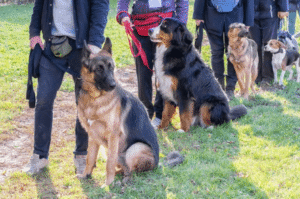
Boise dog group obedience class with trainer and owners.

Welcome to All Dogs Unleashed Boise—if you’re a Boise dog owner looking to give your pup a strong training foundation, then exploring Boise dog group obedience classes is a smart move.

Why Boise Dog Group Obedience Classes Are the Ideal Starting Point

When your dog trains in a group setting, several things happen:

  • The dog learns to focus even when there are other dogs and people around—exactly what life in Boise will bring.

  • It offers structured socialization so your dog interacts safely and positively.

  • You, the owner, gain hands‑on experience with a skilled trainer guiding you.

  • Both dog and handler build confidence through consistent, positive experiences.

Basic obedience is about more than commands—it’s about building trust and creating safe, responsive behavior in everyday life.

What to Expect in Our Boise Dog Obedience Group Classes

At All Dogs Unleashed Boise, our group classes include the essential obedience skills every dog needs: sit, down, stay, come when called, polite leash walking, and more.
We keep class sizes intentionally small so each dog and owner gets individual attention. We create a warm, supportive vibe—training should be enjoyable. Each session builds on the last, so you’ll see steady improvements.

Who Benefits from Group Classes?

Whether you’ve got a puppy, an adolescent dog, or an adult dog who could use better manners, group training works. Dogs of all ages and skill levels can benefit from the social environment and focus‑training structure that group classes provide.

Transition From Group to Advanced Training

Once your dog masters the basics in a group setting, you might consider advancing to more focused training or Board & Train depending on your goals. However, the group class foundation is key. It makes future training smoother.

Ready to see real results? Contact Us and get your dog on the path to success.


FAQ

Q1: What age can my dog start group obedience classes?
A1: Dogs can typically begin once they have basic vaccinations and are comfortable in new settings—puppies, adolescents, and adults all benefit.

Q2: How many dogs are in a class?
A2: We keep class sizes small so each dog gets proper attention and you, the owner, get the support you need.

Q3: What happens if my dog is easily distracted or reactive?
A3: Group classes are designed to help with distractions in a controlled way. If your dog has specific reactivity or behaviour issues, we’ll assess and recommend the best next step—either continuing group work or moving into more focused training.

Q4: Will group classes alone make my dog perfectly behaved in public?
A4: Group classes provide the foundation—they help your dog learn skills in a social setting. Continued practice and possibly advanced training will solidify behaviours for a variety of real‑world situations.

Q5: How long before I see results?
A5: Many owners notice improvements within a few sessions. Consistency and follow‑through at home help accelerate progress.

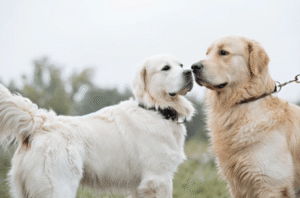
Two Golden Retrievers greeting each other calmly during a training session outdoors, demonstrating Boise dog socialization tips

When you bring your dog out in Boise — to a local park, walking around downtown, or visiting friends — having solid Boise dog socialization tips can make all the difference. In this article, we’ll walk you through how to help your dog handle introductions calmly and confidently. Plus, we’ll show how our team at All Dogs Unleashed Boise supports you every step of the way.

What a Good Dog‑to‑Dog Introduction Looks Like

First, let’s look at what a positive greeting between dogs should involve. For example:

  • Both dogs approach calmly, with tails relaxed and wagging.

  • They show soft eyes, relaxed ears, and no stiff posture.

  • Ideally, each dog has space to sniff and decide whether they want to continue interacting.

As a result, this kind of greeting sets up future outings to be much more enjoyable and less stressful.

Warning Signs During Dog Socialization

However, even with the best preparation, things don’t always go smoothly. Therefore, it’s important to watch for warning signs like:

  • Rigid posture or raised hackles

  • Intense direct staring or lip curling

  • Growling or snapping

When you notice any of these signs, it’s wise to step in and gently redirect or separate the dogs. Otherwise, failing to intervene early may lead to conflict. Fortunately, with the right training, your dog can build the skills to navigate interactions more gracefully.

Boise Dog Socialization Support from All Dogs Unleashed

At All Dogs Unleashed Boise, we focus on equipping both dogs and owners with the tools needed for smooth dog introductions. Specifically, we teach calm approaches, polite greetings, reading the signals your dog gives, and responding thoughtfully.

Whether your dog is shy, overly excited, or unsure how to act around other dogs — we’re here to help. In addition, group environments help your dog experience real‑world social cues in a controlled, supportive setting.

For more guidance, learn how to safely greet a strange dog with tips from the AKC.

Real-World Boise Dog Socialization Tips at Parks

Next, let’s cover some local tips that can make or break your dog’s social experience:

  • To start, choose a quieter spot in a Boise off‑leash park so your dog isn’t overwhelmed.

  • Then, keep the initial greeting short — allow sniffing, then consider offering a treat or moving on.

  • Additionally, watch your dog’s body language carefully. If things stiffen, give space.

  • Over time, practice these interactions regularly so they become second nature.

  • Ultimately, remember: a well‑trained social dog isn’t just better for you — they make outings more enjoyable for everyone.

Final Thoughts on Dog Introductions and Socialization in Boise

In conclusion, using these Boise dog socialization tips will help transform meet‑and‑greets from high‑stress moments into confident, enjoyable interactions. For those ready to build lasting social skills, we’re here to support you every step of the way.

Ready to see real results? Board & Train and get your dog on the path to success.

Still have questions? Contact Us today and speak with a local trainer.


FAQ

Q: How often should I practice dog‑to‑dog introductions in Boise?
A: Regular, short sessions are best — a few minutes at a time, several times a week helps your dog build confidence without overstimulation.

Q: My dog is excited and bounces — is that okay?
A: Too much bouncing or jumping can be overwhelming for another dog. Therefore, it’s best to work on calm greetings and reward relaxed posture first.

Q: Can meet‑and‑greets happen in a group class?
A: Absolutely. In fact, group settings simulate real‑world distractions in a controlled environment, helping your dog generalize polite social behavior.

Q: My dog freezes or hides — what should I do?
A: If your dog freezes or hides, help them by giving space, offering treats, and allowing them to observe from a distance. Over time, training will build their confidence around other dogs.

Boise puppy learning basic obedience with trainer outdoors

Early puppy training is the foundation of well‑behaved adult dogs. If you’re in Boise and searching for Boise puppy training, this article walks you through how to begin with confidence, build trust, and set your pup up for success.

Why Boise Puppy Training Should Start Early

Puppies absorb habits like sponges—good and bad—especially in their first months.
By investing in Boise puppy training early, you prevent behavior problems later and create a solid bond.
You’ll teach structure, guidance, and reinforcement so your pup grows with confidence.
Check out this helpful AKC puppy training timeline for expert guidance on key milestones.

Tailored Boise Puppy Obedience for Every Dog

Every puppy is different—some are bold, some shy—but all learn best with the right approach.
Your training routine can include:

  • Basic commands (sit, stay, come)

  • Crate training

  • Potty training

  • Leash manners

We keep it gentle, fun, and age‑appropriate, so your puppy actually enjoys learning.

Socialization: A Must from Day One

Exposure to people, dogs, and new environments is vital.
Without it, puppies may develop fear‑based behaviors later.
We guide you through structured social scenarios so your pup explores with confidence.

You’re Part of the Team

Training doesn’t end when class does.
We coach you—step by step—so you reinforce lessons at home.
You become an active partner in your pup’s growth.

Adapting to Your Goals

Whether you want a calm family dog, an adventure buddy, or a service companion, every path is unique.
Your training plan adjusts to your goals, your puppy’s temperament, and your lifestyle.
For intensive programs with consistent, professional support, explore our Board & Train options.

Ready to build the foundations now? Consider our Puppy Training for a guided, supportive start. Have questions? Contact Us to learn more about getting started.


Frequently Asked Questions

Q: When should I start Boise puppy training?
A: The best time to begin is between 8 to 16 weeks old. Starting early helps shape positive behaviors while your puppy is most impressionable.

Q: How long are puppy training sessions?
A: Short sessions—typically 5 to 15 minutes—work best for puppies. Consistency and repetition are more effective than long lessons.

Q: What should puppy training in Boise include?
A: Essential skills like potty training, crate training, socialization, basic obedience, and leash manners should all be part of your puppy’s early training.

Q: Can I be involved in the training process?
A: Absolutely! Owner involvement is key. We guide you through every step so you can reinforce the training at home effectively.

Q: What if I need extra support beyond puppy classes?
A: Our Board & Train programs offer more intensive, hands-on training if you’re looking for structured, professional help.

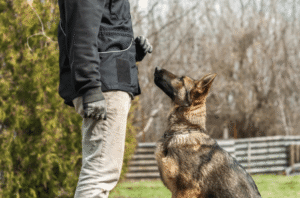
Boise dog trainer giving calm command to German Shepherd at local park

Training your dog well starts with guiding them confidently—and that’s exactly what Boise dog leadership training is all about. In this post, you’ll discover five actionable steps to become a more consistent, trusted leader for your dog—so your bond, your communication, and your home life all improve.

Why Leadership Matters in Boise Dog Training (Not Dominance)

To begin with, dogs don’t respond well to confusion or mixed signals. Instead, when they see you as consistent and clear, they feel safer and more willing to follow.
Importantly, leadership isn’t about dominance—it’s about providing structure, boundaries, and trust.

1. Provide Good Things from You — Building Trust Through Dog Leadership

First and foremost, make yourself the source of desired rewards:

  • For instance, give food, toys, and attention on your timing (not on demand)

  • Additionally, use hand feeding or controlled portions

  • Furthermore, bring out toys or start playtime—don’t let your dog initiate every interaction

As a result, your dog associates you with positive experiences and looks to you first. That’s the foundation of effective Boise dog leadership training.

2. Enforce Waits at Thresholds During Boise Dog Leadership Training

In daily life, doors, crates, and car exits are great leadership opportunities.
Before moving forward, ask your dog to sit, make eye contact, and wait.
This approach builds:

  • Impulse control, for better decision-making

  • Calm behavior, for peaceful outings

  • Clear expectations, for everyday routines

Board & Train programs can be especially helpful for teaching your dog these habits with the guidance of a professional trainer.

3. Advocate for Your Dog — Leadership Training with Compassion

In addition to teaching commands, leadership means protecting your dog—not pushing them into stress.

  • For example, know their triggers and comfort zone

  • Moreover, use tools (leash, muzzle) when needed

  • Lastly, manage their environment—avoid scenarios they’re not ready for

By doing so, your dog learns to trust that you “have their back,” which strengthens your relationship and reinforces dog leadership skills.

4. Be Consistent — The Core of Boise Dog Leadership Training

Consistency is key, especially in leadership.

  • Therefore, set clear rules and stick to them

  • In addition, use the same commands and expectations every time

  • Most importantly, avoid changing rules based on mood

With this in mind, your dog will thrive when your expectations remain stable.
Every great Boise dog leadership training plan starts with consistency.

5. Meet Their Needs Fully with Leadership Training for Dogs

To truly lead, a well-led dog is also a fulfilled dog.

  • Physically, provide daily walks, play, or hiking

  • Mentally, try puzzle toys, scent games, or basic training

  • Training-wise, aim for short sessions throughout the day and include real-life practice

Incorporating daily routines that align with Boise dog leadership training principles ensures your dog’s physical and mental needs are fully met.

For additional strategies, check out these 12 useful dog training tips from the AKC.

Ultimately, when their physical and mental needs are met, your dog will become calmer, more responsive, and balanced.

Final Thoughts: Why Boise Dog Leadership Training Strengthens Your Bond

In summary, by supplying structure, consistency, compassion, and support, you become not just a leader—but a trusted partner.
Consequently, dogs that understand their place in a caring, clear hierarchy are more confident, calmer, and more cooperative.

When practiced consistently, Boise dog leadership training leads to calmer behavior, better communication, and a happier home environment for both you and your dog.

Ready to see real results? Board & Train and get your dog on the path to success.

Need help getting started? Contact Us today to learn how we can help guide your dog toward better behavior.


FAQ

Q: What’s the difference between leadership and dominance?
A: Leadership is about structure, trust, and guidance. Dominance, on the other hand, tries to assert control through force or fear, which can harm trust.

Q: How long until I see a change in my dog?
A: You may notice small behavior shifts within days. However, significant, lasting change may take weeks or months of consistent habits.

Q: Can I use these tips if I have a puppy?
A: Absolutely. In fact, these leadership foundations are even more powerful with puppies, shaping lifelong healthy behaviors.

Q: What if my dog resists thresholds like door waits?
A: Start gradually—practice waits in a low‑distraction space. Then, reward small improvements and build confidence over time.

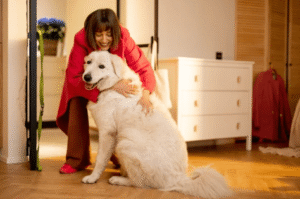
Woman calmly greeting large white dog in cozy Boise home

When visitors arrive, many dogs bark, jump, or dash to the door. In Boise, using Boise dog greeting training techniques can help your pup welcome guests calmly and confidently. This post walks you through steps you can start today to transform chaotic greetings into polite ones.

Why Boise Dogs Struggle with Greeting Behavior

Dogs often react when guests arrive because:

  • It’s novel or exciting

  • It breaks routine

  • It triggers anxiety or territorial responses

Without guidance, instincts take over—and that’s when barking, jumping, and charging the door start.

Step 1: Set Up a Calm Cue Spot for Visitor Greetings

First, teach your dog to go to a specific spot (a mat, bed, or “place”) when the doorbell rings.

  • To begin, use treats and repetition

  • Then, reward calm posture (lying down, sitting)

  • Finally, delay permission to greet

Over time, your dog learns that calm behavior—not excitement—gets reinforced.

Step 2: Boise Dog Threshold Training at the Door

Next, control the “zone” just inside the doorway.

  • For example, ask your dog to stay behind a barrier or line

  • Then, only let them cross when calm

  • In addition, practice this gradually

As a result, this teaches impulse control around entrances.

Step 3: Greeting Guests Politely with Boise Dog Greeting Training

Instead of free-for-all greetings, introduce structure.

  • First, let your dog approach guests only after calmness is confirmed

  • Additionally, discourage jumping by turning away or withholding attention

  • Lastly, praise polite greeting behavior

This approach turns greetings into earned privileges.

Pro tip: If your dog struggles with polite greetings or impulse control, our Board & Train program offers hands-on help from professionals who specialize in in-home behavior transformation.

Avoid These Common Greeting Training Mistakes

However, even good training can go sideways without consistency. Be sure to avoid these common pitfalls:

  • Inconsistency: Everyone must enforce the same rules

  • Rushing: Don’t allow greetings too early

  • Lack of reinforcement: Always reward calmness

Ultimately, consistent practice is what shifts reactive habits.

Create a Calm Boise Home with Proper Greeting Behavior

With Boise dog greeting training, your home can feel more peaceful. Visitors should feel welcomed—without chaos—by your dog’s relaxed demeanor.

If you host often, or just want stress-free dinners at home, you can make calm greetings the new norm.

For more tips on safe guest interactions, check out this guide to greeting dogs properly from the AKC.

Have questions or want personalized guidance? Contact Us — we’re happy to help.


FAQ: Boise Dog Greeting Tips

Q: How long does it take to teach calm greetings?
A: It depends on consistency and your dog’s temperament. However, many dogs show improvement in 2–4 weeks with daily practice.

Q: Should I use a leash when training greetings?
A: Yes — a leash helps control the initial interactions and prevents jumping or rushing. In addition, it gives you control over the situation.

Q: My dog still jumps on guests. What next?
A: Return to the calm cue spot and reinforce impulse control before reintroducing greetings. Eventually, consistency pays off.

Q: Can this work for multiple dogs?
A: You’ll need to train each dog individually first. Then, practice greetings together slowly for best results.

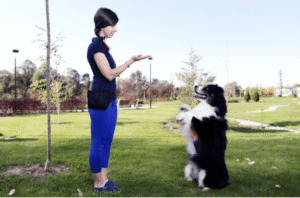
Dog performing obedience command with female trainer in Boise park

Teaching Boise dog obedience commands is one of the best things you can do for your dog—and your peace of mind. Whether you’re strolling through the Boise Greenbelt or relaxing at home, a dog that listens well makes every moment smoother and safer. In this guide, we’ll walk through six essential commands your dog should know. Plus, you’ll learn how to teach and reinforce them in real-world settings.

Why Boise Dog Obedience Commands Matter for Every Dog Owner

Boise’s parks, trails, and community events offer endless adventures—but only if your dog is well-behaved. As a result, obedience training builds confidence, improves safety, and strengthens your bond. Most importantly, it sets your dog up for success in every environment.

The 6 Essential Boise Dog Training Commands

These six commands are the foundation of a well-mannered dog. Therefore, it’s important to start simple, stay consistent, and build on each success.

1. Leash Manners for Better Dog Obedience in Boise

Loose leash walking makes every walk more enjoyable—for both of you. To begin, use a “pre-heeling” drill to teach your dog where to walk and how to stay focused.

  • First, start indoors or in your yard

  • Then, stop walking when your dog pulls

  • Finally, reward them for staying beside you

2. Teaching Calm with the “Doing Nothing” Command

Teaching your dog to chill out—just sit or lie down calmly—is a powerful skill. For example, you can use it while waiting at the vet or sitting at a coffee shop.

  • Start by practicing during downtime at home

  • After that, use this command in public settings

  • Always reward calm behavior, not energy

3. The “Sit” Command – Core to All Boise Dog Obedience Training

“Sit” is the foundation of control. It’s the go-to move before doors, meals, or greetings.

  • Begin by luring with a treat above the nose

  • Then, mark and reward the moment their rear hits the ground

  • In the long run, use “sit” before every routine event

4. Mastering “Down” – A Must for Obedience Commands in Boise

“Down” adds an extra layer of impulse control. Additionally, it helps with calming your dog in busy or exciting environments.

  • Use the “3 D’s”: Duration, Distance, Distraction

  • First, start in quiet spaces

  • Gradually increase both time and distance

5. Crate Drills

Crates are not punishment—they’re a valuable training tool. In fact, teaching your dog to enter, stay, and exit calmly is essential.

  • Start by using treats to build positive association

  • Then, teach “wait” and “okay” cues

  • This is especially helpful for travel, vet visits, and downtime

6. The Name Game

Your dog’s name should trigger eye contact. Consequently, this builds attention before giving any cue.

  • Say their name, then reward eye contact

  • Avoid repeating or using it negatively

  • Over time, use it in new places to strengthen focus

For more helpful cues, check out the AKC’s list of useful commands.

Pro Training Tips for Faster Results

To get better results faster, follow these proven training habits:

  • Keep training sessions short (5–10 minutes)

  • Practice daily in different locations

  • Always use high-value rewards at first

  • Be consistent—use the same words and timing

  • Whenever possible, end each session on a win

Need help getting started with Boise dog obedience commands or stuck on a specific behavior? Contact Us today and speak with a Boise-based trainer about your goals.

Where to Practice in Boise

If you’re looking for local places to practice, here are a few ideas:

  • Greenbelt paths: Great for leash manners

  • Camel’s Back Park: Ideal for sit/down with distractions

  • Your backyard or living room: Safe space for crate drills and name work

  • Dog-friendly patios: Practice “doing nothing” while you relax

Want a pro to do the heavy lifting? Our Board & Train program gives your dog daily, personalized coaching for fast, lasting results.


FAQ

Q: How long does it take to teach these commands?
A: Most dogs learn basics in 2–4 weeks with daily practice. However, more complex behaviors may take longer.

Q: Should I train all commands at once?
A: Not necessarily. It’s best to focus on one or two at a time. Then, build mastery before moving on.

Q: What if my dog won’t listen outdoors?
A: In that case, go back to basics in a quiet spot. After that, slowly add distractions and increase the challenge.

Q: Can I use treats forever?
A: Initially, yes. Over time, you’ll fade treats and replace them with praise, play, or real-life rewards.

Q: When should I seek professional help?
A: If you’re stuck, Contact Us for support or to discuss training options tailored to your dog.

Boise dog training in local park

If you’re searching for the best Boise dog board and train program, you’re in the right place. At All Dogs Unleashed, we specialize in results-driven training that transforms behavior — without changing your dog’s unique personality.

Why Choose Board & Train?

Many Boise dog owners struggle with consistency, leash manners, or basic obedience. That’s exactly where our Board & Train program comes in.

Here’s why it works so well:

  • First of all, a professional trainer works with your dog every day — not just once a week.
  • In addition, our trainers reinforce structure, boundaries, and calm behavior daily.
  • As a result, your dog learns to live with obedience as a lifestyle — not just follow commands occasionally.
  • Finally, you receive hands-on coaching to help you maintain the training at home.

Altogether, this immersive approach creates lasting change that truly sticks. Even the American Kennel Club recognizes board and train programs as an effective way to build foundational obedience.

What’s Included in Our Boise Board & Train Program?

In just three weeks, we guide your dog through a complete behavioral transformation. Here’s what we include:

  • To begin with, your dog learns on-leash and off-leash obedience with a reliable recall in every environment.
  • Next, they master polite manners both at home and in public — no more jumping, barking, or pulling.
  • Additionally, we focus on confidence building exercises to reduce anxiety and reactivity.
  • Meanwhile, we train a calm mindset around distractions, people, and other dogs.
  • Most importantly, we provide daily enrichment and structure — we actively engage your dog mentally and physically.

In short, we tailor the experience to your dog’s needs and deliver long-term success.

A Training Experience Your Dog Will Love

Throughout the program, your dog lives in a clean, home-style environment we’ve designed for comfort and safety. More importantly, we combine training sessions with rest, play, and enrichment.

We keep training positive, structured, and enjoyable. Here’s what you’ll experience:

  • First, we provide regular progress updates so you stay informed.
  • Then, we send you video clips so you can watch your dog’s transformation in real time.
  • After that, you complete a detailed go-home lesson with hands-on coaching for a smooth transition.
  • Finally, we continue to support you after graduation to maintain results.

Altogether, we designed our Board & Train program to deliver dependable, real-world outcomes.

Who’s a Good Fit?

Our Board & Train program suits dogs and owners ready for real change. It works best for:

  • To start, dogs 6 months and older who are ready to learn.
  • Also, friendly, social dogs without severe aggression issues.
  • And finally, owners committed to continuing the training at home.

If your dog is younger, we recommend starting with our Puppy Training before moving into the full program.

Real Stories from Real Boise Dog Owners

One local client told us, “I just don’t want my dog to lose their spark.” After completing the program, their dog returned home obedient, calm, and still full of personality — just with better behavior.

In fact, we’ve helped dozens of Boise-area families go from chaos to calm. So, if you’re ready for a real transformation, you’re not alone — and we’re here to help. Have questions? Contact Us today and let’s get started.


FAQs About Our Boise Dog Board and Train

How long is the program?
Our standard Board & Train lasts three weeks.

Will my dog forget me?
No. Your dog will come home more focused, connected, and eager to please.

Do you use harsh methods?
Never. We use balanced, humane training customized to your dog’s needs.

Will I know how to keep it going?
Absolutely. You’ll complete a detailed go-home lesson and receive post-program support.

What if my dog has serious issues?
We can address many behavior concerns in this program. For others, we’ll create a custom plan. Contact Us to talk through it.

Dog on leash during neighborhood walk in Boise as part of obedience training program

Choosing a Boise dog training program can feel overwhelming, especially with so many options out there. However, when you match your dog’s needs and your lifestyle to a program, the decision becomes much clearer.
To help you get started, we break down common program types, who they work best for, and what to consider in the Boise area as you make your choice.

Boise Dog Training Program Types: What Are Your Options?

Private Lessons in Boise: A Flexible Dog Training Option

First, private lessons give you direct, individualized guidance with your trainer. In each session, you get feedback, problem-solving, and a plan created to fit your dog’s personality and your goals.
Best for:

  • Owners who want hands-on involvement

  • Dogs with mild to moderate issues

  • Flexible scheduling

Board & Train: Immersive Dog Training in Boise

Next, with a Board & Train program, your dog stays with the trainer for a set period (e.g. 2–4 weeks). During this time, they receive structure, consistency, and professional handling every day.
Best for:

  • Dogs with serious behavior challenges (reactivity, fear, aggression)

  • Owners who need a jumpstart

  • Puppies needing strong fundamentals

Group Classes for Boise Dog Obedience Training

In contrast, group classes let your dog train around distractions—other dogs, people, and noises—while building obedience in a controlled setting.
Best for:

  • Friendly dogs needing social exposure

  • Owners who enjoy learning in a group

  • Dogs with fewer behavioral issues

For more insight, check out this helpful AKC guide to choosing a dog training class.

Online Dog Training Options in Boise

Alternatively, if you can’t make in-person sessions, online courses provide structured learning via videos, workbooks, and remote support.
Best for:

  • Owners with tight schedules or distance constraints

  • Dogs without serious behavioral issues

How to Choose the Right Dog Training Program in Boise

Before deciding, think about the following factors:

  • Your dog’s age & temperament. For example, a high-drive adolescent may do better in immersive training, while a laid-back senior might thrive with private lessons.

  • Behavior challenges. If your dog struggles with serious issues, a more controlled environment like Board & Train is often the best fit.

  • Your time and commitment. On the other hand, if you want to be deeply involved, private lessons or group classes might suit you better.

  • Logistics & location. In Boise, you should also factor in travel time, session availability, and how consistent you can be with attendance.

Final Thoughts

Ultimately, there’s no one-size-fits-all solution for choosing a Boise dog training program. Instead, the right one aligns your dog’s needs, your schedule, and your desired outcome.

Ready to make the best choice for your dog and get started on the right path? Board & Train is a powerful option to fast‑track results. Have questions? Contact Us to talk with a trainer today.


FAQ

What’s the fastest way to see behavioral change in my dog?
Typically, a Board & Train program yields rapid, visible results because of its immersive, consistent approach.

Can I switch from one program style to another?
Yes, absolutely. Many owners begin with private lessons or Board & Train and then transition into group classes or home maintenance.

Do I still need to train after Board & Train?
Definitely. You’ll get coaching and follow-up so you can maintain and build on the progress your dog made.

How do I know which Boise dog training program is right for my dog?
Ideally, you should consider your dog’s age, temperament, and behavior challenges. If you’re unsure, Contact Us for personalized guidance.

Are group classes in Boise good for all dogs?
Not always. While group classes are great for friendly, social dogs, those with significant behavior issues may benefit more from private lessons or Board & Train first.

Dog calmly waiting by front door in a Boise home during door dashing training

If your dog bolts through doors, it’s not just a cute quirk—it’s dangerous. Fortunately, with Boise door dashing dog training, you and your pup can learn boundaries, calmness, and trust at every exit.

Why Dogs Dash Out the Door

Many dogs develop the habit of rushing through doors for a variety of reasons. For example, some struggle with impulse control. Others act on curiosity or a strong chase instinct—especially when they see a squirrel or smell something new. Additionally, some dogs bolt due to fear, stress, or overstimulation inside the home.
As a result, what starts as random behavior often becomes a game—dash, get attention, repeat. However, in some cases, the behavior stems from anxiety or a flight response.

Dangers of Door Dashing Behavior in Boise Dogs

Running out unexpectedly puts your dog at serious risk. For instance, they could get hit by a car. Or, they might get lost or injured in unfamiliar areas.
Even worse, they may startle neighbors or wander into unsafe terrain. In Boise, where busy streets and open land are common, even a short dash can lead to major consequences.

How We Do Door Obedience Training in Boise

At All Dogs Unleashed Boise, we use structured methods to fix this behavior. Specifically, our door dashing dog training focuses on impulse control, boundaries, and consistent routines.

1. Impulse Control for Door Obedience

First, we teach your dog to pause, make eye contact, or settle before the door opens. This helps them build patience and wait for your lead.

2. Threshold Training to Stop Door Dashing

Next, we work on doorframe exercises. Over time, we increase distractions so your dog learns that doors are boundaries—not launchpads.

3. Teaching a Clear Release Cue at Doors

Then, we introduce verbal cues like “wait” or “stay.” After that, we teach a clear release word, so your dog knows exactly when it’s okay to move.

4. Family-Wide Consistency in Door Manners

Finally, we get the whole household on the same page. Everyone follows the same rules, which eliminates confusion and ensures reliable behavior.
For more techniques, check out this AKC guide on stopping door darting.

Creating Lasting Door Manners with Boise Dog Training

With a structured training plan, your dog learns that calmness brings rewards. As a result, you gain peace of mind—no more heart-pounding escapes through open doors.
Eventually, what once felt like chaos becomes a predictable, relaxed routine that your dog understands and enjoys.

Boise Training Programs to Stop Door Dashing

At All Dogs Unleashed Boise, we offer options based on your dog’s age and behavior level.

  • For young pups, our Puppy Training program helps prevent bad habits before they start.

  • For dogs with deeply rooted escape routines, our immersive Board & Train program builds long-term obedience.
    If you’re unsure which program fits your situation, Contact Us today—we’re here to help.


FAQ Schema

Q1: What is door dashing in dogs?
A1: Door dashing is when a dog quickly escapes through open doors, often driven by excitement, impulse, or chasing instincts. It poses safety risks such as traffic accidents or getting lost.

Q2: At what age should door dashing behavior be addressed?
A2: As early as possible—even in puppyhood. Early training during Puppy Training helps prevent door dashing from becoming a habit.

Q3: Can every dog learn to stop dashing out doors?
A3: Yes—with consistent training, clear cues, and reinforcement. Even dogs who are habitual are able to learn calmer behaviors.

Q4: How long does it take for door obedience to become reliable?
A4: It depends on the dog’s prior behavior, consistency at home, and training frequency. Many Boise pets show noticeable improvement in a few weeks with daily practice.

Q5: What should I avoid doing while training door manners?
A5: Don’t leave doors unguarded too early, avoid mixed signals (like sneaking your dog out), and don’t punish impulsive behavior—redirect and reward calm waiting instead.