


When it comes to dog training, there’s a lot of debate about which methods are the most effective. Some trainers insist that if you don’t include at least some punishment-style tactics in your training, your dog won’t behave. At ADU, we have a different perspective. Read on to learn why a fear-based dog training strategy hurts more than it helps.

Punishment Centers “Bad” Behavior

When we talk about fear-based training, we’re talking about using unpleasant stimuli to teach your dog which behaviors are unacceptable. For example, fear-based trainers may encourage you to yell or use physical force when your dog barks at the neighbors or steals your shoes.

This kind of negative reinforcement may get your dog to stop the unwanted behavior simply as a means to end the unpleasant stimuli. What it won’t do is teach them what kind of behavior you do want from them or how they can express themselves in an appropriate way.

Fear-Based Training Positions You as a Threat

Your dog may not associate all fear-based tools directly with you. For example, they may not understand that you’re the one hitting the button on that shock collar. However, a lot of punishment will come straight from you, and your dog will start to associate you with their discomfort.

This positions you as less of a companion and more of a threat, which can make your dog extremely avoidant. It’s challenging to teach an avoidant dog important skills like recall because they won’t possess that inherent desire to be by your side.

Anxiety Doesn’t Help Your Dog Learn

How does fear-based training impact your dog in the long run? Research shows that dogs who undergo aversive training show more signs of anxiety, like high cortisol levels and low behavioral states, than dogs who undergo reward-based training.

At ADU, we try to give our dogs time to regulate and calm down before we start training. We find that a calm dog is not only easier to work with, but also more receptive to learning new behaviors and commands. A dog that’s in fight or flight mode is primarily concerned with creating safety, which doesn’t always involve listening to a trainer or owner.

Obedience and Dominance Aren’t the Same Thing

Most fear-based trainers abide by the belief system that owners should exert full control over their dogs and may encourage you to become the “alpha” of your household. Yet, dog behavioral experts point out that in the dog-owner dynamic, there’s no need to establish dominance when you already control so much of your dog’s resources and schedule.

Instead, we encourage owners to foster obedience in their dogs. An obedient dog may make mistakes sometimes, but they want to make you happy, and they’re easily corrected. You don’t need to create a submissive, fearful dog to see positive results.

At All Dogs Unleashed, we prefer methods like clicker training and positive reinforcement to help our dogs become the best they can be. Learn more about our training programs today!
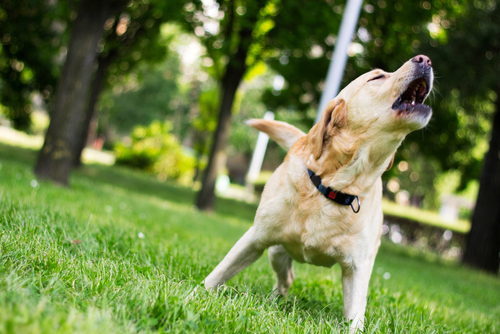

stop my dog's excessive barking

Barking is normal behavior for your dog. Dogs bark to communicate with each other and with people. Still, it’s common for dogs to bark too often, or in response to stimuli that makes their barking a nuisance to their owners. You may be wondering: “Can All Dogs Unleashed stop my dog’s excessive barking?”

Absolutely, we can!

When we begin working with you and your dog, we will improve the bond between you. We will teach you to communicate clearly with your dog, use proper timing to reinforce positive behavior, and increase your dog’s ability to receive commands from you.

Each of these factors will come to play as we work on your dog’s barking problem. It’s unlikely that you’ll be able to redirect your dog without having these fundamentals in place. This is one of the many reasons that we strongly recommend that owners who are struggling with their dog’s behavioral issues first enroll in training courses, then begin retraining with proper techniques.

However, we do want to share a few tips that can be used to reduce your dog’s barking.

1. Give Your Dog Mental and Physical Interaction

Your dog needs exercise, obedience training, and play every single day.

For exercise, walking with your dog two or three times per day will be adequate for all but high-energy working breeds. These specialized dogs have been bred to have incredible stamina and high intelligence and require fitness and obedience routines to suit their needs.

After you have taken your dog on one of your walks and offered water, it’s time to break out the treats and run through an obedience routine. Your dog will be calm, happy, and therefore best prepared to engage with you.

2. Offer Toys

Once your dog has completed both exercise and obedience training, you may offer a chew toy, ball, or plush toy, depending on your dog’s preference. After you’ve had time to focus on your own goals for a while, loop back and spend a few minutes playing with your dog. Throw the ball, play tug-of-war with a rope toy, or make the stuffed toy “come alive.”

This type of routine will leave your dog focused on paying attention to your actions rather than keeping its ears perked for an opportunity to bark.

3. Never Reinforce Barking

The knee-jerk reaction from many owners is to yell or call their dog’s name when the barking starts. But what exactly does this teach a dog?

“It was boring. Then I heard something exciting, I barked, and then my owner(s) joined in the excitement! This is way better than sitting quietly.”

The dog has only learned that barking is fun, entertaining, and a guaranteed way to earn attention from you!

The way out of this loop is to anticipate your dog’s barking and offer preemptive praise for silence. For example, if you know your dog barks at the mail carrier, have a pouch of high value treats on your person when you expect the mail to arrive. When your dog perks up at the sound of the mail truck, but before the barking begins, praise your dog for being quiet and offer a treat.

Continue this back and forth every ten seconds. If your dog begins to bark, instantly turn your back, put the treats away, and walk away. Do not correct your dog, and do not interact with your dog.

If your dog falls silent right away, turn back to face him, offer praise, and give a treat. If your dog continues to bark, you must not react. Over time, your dog will deduce that being quiet means praise and delicious snacks, while barking is a boring dead-end.

If your dog barks when you let them out into the backyard, spend time outside with them. Listen for a neighbor’s dog barking, look for squirrels running by, or any other stimuli that prompts your dog to bark. Just like in our mail carrier example, your job will be to take advantage of that split second opportunity after your dog registers the stimuli, but before the barking begins. At this critical moment, you’ll offer treats and praise for being quiet.

4. Teach Your Dog to Bark on Command

Now that you are only listening to your dog barking when it’s intended to communicate with you, it’s a great opportunity to teach your dog to bark on command. This will solidify your dog’s concept of barking as something that should happen for specific reasons, at specific times.

Once we’ve worked with you and your dog and taught you how to elicit barking on command, you can incorporate barking into your dog’s daily obedience training regimen. This will allow your dog to use barking for fun, entertaining activities—which is likely what she was going for in the first place!

A Final Note
If there’s one thing we know about training dogs, it’s that yelling, hitting, shoving, or intimidating your dog will not improve their relationship with you, their ability to be obedient, or their confidence to respond well to new training.

While it can be frustrating to have a dog who barks at everything (or seemingly nothing), it’s vital that you stop using any of these ineffective methods.

Instead, please contact us today. We invite you and your canine to work with our All Dogs Unleashed team to learn powerful positive training methods that will transform your dog into an enjoyable, obedient companion animal.


dog training

It’s an aspect of dog training that you will be teaching him many verbal commands. Sit, stay, heel and come will be staples of your routine. Your dog is responding to more than just the words you use; he’s interpreting your tone of voice, your body language, and your facial expressions to determine the nature of your commands. In this vein, language is so much more than verbal. Your dog has his own ways of communicating with you that you can interpret if you know what to look for.


A dog communicates primarily with body language and secondarily with verbal cues. When you observe your dog, make sure that you observe his entire body. Don’t just pay attention to the tail or the ears. He may be wagging his tail but the rest of this body may be saying something entirely different. When it comes to communication, different cues can be grouped into five categories: fear, aggression, anxiety, arousal, and relaxation.


Fear: A frightened dog may cower or whimper. He may lower his body, tuck his tail, and retreat. Other signs are trembling, shaking, licking his lips or yawning, putting his ears back, and leaning back. A dog that acts differently from normal may be exhibiting fearful behavior. If he’s avoiding people, staying hidden, and not eating, these could also be behavioral signs of fear.


Aggression: Knowing what to look for in an aggressive dog can be the difference between defusing a situation and escalating one. Dogs often display aggression when they are guarding their territory. Growling or barking are obvious verbal cues, but look for other body language before these occur. A dog may stiffen first to show aggression. He may put his ears back or widen his eyes. Heed these actions before the dog starts nipping at the air to de-escalate the situation.


Anxiety: The signs of an anxious or stressed out dog will be in some ways very similar to a fearful dog. He may display pacing and panting, licking his lips and yawning. If a dog is continually anxious, his health may suffer and he may shed excessively and drool. If your dog is in a kennel and is uncomfortable with his surroundings, you will be able to see his anxiety in his behavior.


Excitement/Arousal: A dog’s excitement behavior is generally standing erect with ears forward and tail wagging quickly and stiffly. He may bite, bark, or lunge forward. He may jump, run in circles or back and forth. He may pant excitedly, or alternate moving his legs in place as if he wants to run and doesn’t know where to go.


Relaxation: A relaxed dog is perhaps the easiest dog to identify. His legs may sprawl out lazily when lying down instead of tucking under his body. His mouth will hang open with his tongue drooping out. His head and ears will be central and he will make happy grunts. His tail will slowly wag back and forth and his muscles will be loose. A relaxed pup is a happy pup.


Learning the verbal and non-verbal cues of your dog is an essential part of dog training. At All Dogs Unleashed, we will train you in identifying these behaviors so you can understand your dog throughout the teaching process. The better communication you have with your best friend, the better your relationship will be throughout his lifespan.