


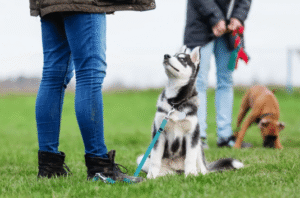
Husky puppy sitting on grass during outdoor dog training class in Boise, looking up at trainer.

If you’re a dog owner in Boise, you understand how much it means to have a well‑behaved, happy pup. Enrolling your dog in Boise dog training classes can be a true game‑changer. Not only does it improve manners, but it also deepens your bond with your dog—here’s how.

Why Boise Dog Training Classes Speed Up Progress

To begin with, joining a class led by certified trainers helps your dog learn faster. These professionals work with all breeds and behavior types, and they tailor methods to fit your dog’s unique personality. For example, a bold Labrador may need different strategies than a shy rescue.

Additionally, you can explore structured training programs by the AKC to learn more about what a comprehensive curriculum can include.

Boosting safety through obedience

Dogs that reliably follow cues like “sit,” “stay,” or “come” stay safer in real-world situations. As a result, from busy Boise streets to unexpected encounters at the park, strong obedience protects your dog in everyday life.

Tackling problem behaviors with confidence

Jumping, barking, and reactivity often frustrate owners. However, the right classes give you tools to manage and change these behaviors. With expert support, many dogs show noticeable improvements and become calmer companions.

Socialization Benefits of Dog Training Classes in Boise

In addition to learning obedience, dogs grow more confident when they face controlled challenges. In group classes, they meet other dogs and people in a structured setting. Consequently, this exposure reduces anxiety and builds the social skills your dog needs.

Build a Better Bond Through Boise Dog Training

Above all, training builds communication and trust. When your dog understands what you expect, they feel secure. Therefore, you’ll enjoy outings, walks, and daily life more—with fewer corrections and more connection.

Have questions or want help choosing the right class? Contact Us today and speak with a local trainer.

Ready to see real results? Board & Train and get your dog on the path to success.


FAQ

Q: What age should my dog start Boise dog training classes?
A: Most trainers recommend starting as early as eight to ten weeks for puppies, but adult dogs benefit greatly too. It’s never too late.

Q: How long until I see results from Boise dog training classes?
A: While results vary, many owners notice improvements within a few weeks of consistent classes and practice.

Q: Do I need to practice at home after attending Boise dog training classes?
A: Yes. Regular short sessions at home reinforce what’s learned in class and help make good behavior a habit.

Q: Can standard training classes handle serious behavior issues like aggression?
A: For mild to moderate behavioral concerns, group classes are a strong option. But for severe aggression or anxiety, a specialized program or one‑on‑one training may be needed.

Dog trainer working with a German Shepherd in a Boise park during a professional dog training session

Investing in professional dog training Boise dog owners trust is one of the best decisions you can make for your pet’s well‑being and your peace of mind. Whether your pup is a playful puppy or a full‑grown adult dog, these classes offer serious value for Boise dog owners.

Why Professional Dog Training in Boise Matters

Quality training improves your dog’s obedience, confidence, and safety—while building a deeper relationship between you and your pet. Let’s look at why it’s worth it.

1. Safety Comes First with Boise Dog Training Programs

When your dog learns commands like “sit”, “stay”, and “lie down,” sudden dangers—such as traffic or chasing other animals—become less likely. Effective training also emphasizes solid recall, so your dog comes when you call.
However, without this foundation, even friendly dogs can find themselves in risky situations.

2. Correcting Bad Habits Through Professional Dog Training Boise

Does your dog jump on guests, bark excessively, or show aggression toward other dogs or people? Training helps correct these problem behaviors. Many dogs end up in shelters because their issues weren’t addressed early.
In addition, professional training gives you tools to deal with it properly.

3. Building Trust Through Expert Obedience Training

Training isn’t just about teaching your dog—it’s about building a two‑way conversation. As you work together, you and your dog learn to understand each other better, fostering trust and respect.
For example, structured sessions build that connection in a way casual playtime often doesn’t.

4. Social Skills Gained from Dog Training in Boise

Dogs that struggle around other animals or people often need more than basic obedience—they need structured exposure and guidance. Instead of isolating your dog, training provides a constructive way to encourage positive interactions.
It’s especially helpful if your dog shows territorial behavior, toy possessiveness, or intimidation toward strangers.

5. Mental Enrichment with Professional Dog Training

Just like people, dogs thrive when their minds are engaged. Training exercises stimulate your dog’s cognition, which can prevent destructive habits—like chewing or excessive digging—that stem from boredom.
In addition to classes, consistent home practice, regular walks, and playtime form the ideal mix.

Why Choose Professional Dog Training Boise Experts?

A proven training program focuses not only on your dog but on you as the owner—giving you the skills to sustain progress long after classes end. Consistency across your household is vital for success.
For example, if everyone uses the same commands and rewards systems, your dog learns faster and retains the behavior longer. Learn more about structured training programs from the AKC.

What’s Next for Boise Dog Owners?

If you’re searching for reliable, results-driven professional dog training Boise families recommend, look for a program that offers structured sessions, ongoing support, and reinforcement at home. Choose one that prioritizes both obedience and your dog’s long‑term happiness. Have questions? Contact Us for details.

Ready to see real results? Board & Train and get your dog on the path to success.


FAQ

Q: What age should I start dog training classes?
A: Puppies can begin training as early as 8 weeks old. Early socialization and basic commands lay a strong foundation for future learning.

Q: Are group classes or private sessions better for my dog?
A: It depends on your dog’s temperament. Group classes help with socialization, while private sessions offer personalized focus for specific behavior issues.

Q: How do I know if my dog needs professional training?
A: If your dog shows signs of aggression, disobedience, fearfulness, or excessive barking, professional training can help correct these issues.

Q: Will dog training classes help with separation anxiety?
A: Yes, structured training boosts your dog’s confidence and can reduce anxiety by establishing routines and building trust with you.

Q: What should I bring to a dog training class?
A: Bring treats, a leash, a collar or harness, water, and a positive attitude. Your trainer may provide additional guidance before class begins.