


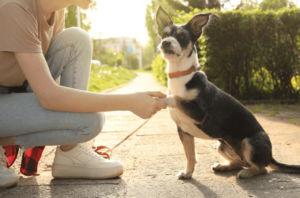
Small dog giving paw to trainer on a quiet Boise sidewalk during fearful dog training session

Many Boise dog owners struggle with reactivity — barking, lunging, or fearful behavior when their pup sees other dogs, people, or new environments. Fortunately, fearful dog training Boise offers a proven path to help your dog become calm, confident, and well-behaved. As a result, you’ll both enjoy walks and outings again.


Why Fearful Dogs React — And Why It’s Not “Bad Behavior”

Reactivity is often misunderstood. In fact, what looks like aggression is usually fear, insecurity, or overstimulation. Therefore, your dog isn’t being stubborn — they’re simply trying to cope with something that feels overwhelming.

For example, common triggers include:

  • Other dogs on walks
  • New people or environments
  • Loud noises or fast movements
  • Past trauma or lack of socialization

Instead of punishing these reactions, the goal is to gently change how your dog feels in those situations. That’s why working with a professional trainer is so important.


Fearful Dog Training Boise: Positive, Proven Techniques That Work

At All Dogs Unleashed Boise, we use science-based, force-free methods to help dogs overcome anxiety and learn better responses. As a result, our approach builds lasting confidence and trust.

Our process includes:

  • Desensitization & Counter-conditioning: We gradually introduce triggers in a way your dog can handle — and pair them with positive experiences like treats and praise. Consequently, your dog begins to associate those triggers with good things.
  • Confidence-Building Exercises: We use simple tasks and games that teach your dog to focus and succeed, even in distracting situations. In turn, this reduces fear-based responses.
  • Calm Behavior Training: Rather than barking or lunging, your dog learns alternative behaviors like sitting, making eye contact, or calmly checking in. Eventually, these responses become second nature.
  • Controlled Exposure: We practice in safe, structured environments before tackling real-world scenarios. This way, your dog is set up for success.

If you’re looking for immersive help, our Board & Train program provides expert-led, daily reinforcement that helps dogs make faster progress. Above all, it’s designed to build lasting change.


Real Results from Boise Reactive Dog Training

We’ve helped countless families in Boise turn stressful walks and fearful outings into relaxed, happy experiences. As a result, their dogs can calmly enjoy parks, neighborhoods, and even busy sidewalks.

Whether your dog is reactive to other dogs, strangers, or noises, we meet them where they are. Then, we guide them step-by-step toward confident, calm behavior.

In addition, no two dogs are the same. That’s why we customize every training plan based on your dog’s personality and needs. By using real-world scenarios and positive reinforcement, we ensure results that last.


Getting Started with Fearful Dog Training Boise

If your dog struggles with reactivity, now’s the time to take action. After all, the earlier you start, the sooner your dog can feel confident and safe in the world around them.

If you’re struggling with a reactive or anxious dog, fearful dog training Boise gives you the expert support needed to change behavior for good. With our help, your dog will learn to feel safe and stay calm even in triggering situations.

For additional guidance, the AKC offers a helpful article about working with fearful dogs.

Ready to take the next step? Contact Us for a free consultation, and let’s create a training plan that brings peace back to your walks.


FAQs About Reactive Dog Training

Q: Can my reactive dog ever be “normal” around other dogs?
A: Absolutely. With the right training and time, most reactive dogs learn to feel calm and safe around triggers.

Q: Is punishment a good way to stop reactivity?
A: No. Punishment can increase fear and damage trust. We use positive methods that build confidence and lasting change.

Q: How long does training take?
A: It varies. Some dogs improve in weeks; others need several months. A Board & Train option can speed up results with daily expert coaching.

Q: Is reactivity common in Boise?
A: Yes! Boise’s active, dog-loving community means more exposure to triggers. That’s why local training support is so important.
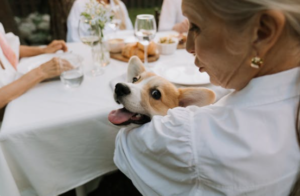

Corgi begging at outdoor dinner table with Boise family

Dogs begging at the table can turn peaceful meals into a frustrating experience — especially if you’re constantly saying “no” while trying to enjoy dinner. However, with consistent dog begging training in Boise, you can teach your pup calm mealtime manners that stick. At All Dogs Unleashed, we provide expert dog training in Boise to help your dog behave better at home and in public.

Why Dog Begging Happens – Insights from Boise Dog Training Experts

Even the smartest dog will beg if it worked once. For instance, a dropped scrap or hand-fed treat teaches them that persistence pays off. As a result, your dog learns to stare, whine, or paw during meals — hoping it leads to food again.

Common begging behaviors include:

  • Sitting under or next to the table

  • Whining or barking during meals

  • Pawing or nudging for attention

  • Drooling and staring at your plate

Fortunately, this habit can be reversed with structure and the right dog training approach.

What Good Mealtime Behavior Looks Like After Dog Begging Training

Ideally, a well-trained dog understands that the table is off-limits. Instead of hovering or begging, they relax in a designated spot like their bed or crate while you eat. Consequently, there’s no pacing, barking, or distraction — just calm presence.

As a result, meals become more enjoyable and your dog gains clarity on what’s expected.

How to Stop Table Begging: Dog Training Boise Step-by-Step

1. Set a Mealtime Zone for Your Dog

First, designate a calm location for your dog — like a mat, bed, or crate — during meals. Then, use commands like “place” or “stay” to reinforce the habit.

2. Reinforce Calm Behavior During Meals

Instead of responding to whining or pawing, only offer praise, attention, or rewards when your dog stays in their spot. Never feed from the table. That one-time treat, for example, can reset all your progress.

3. Consistency is Key in Dog Training

To succeed, every family member needs to follow the rules. Otherwise, slipping food under the table or sneaking snacks can confuse your dog and stall progress.

4. Positive Reinforcement from Your Boise Dog Trainer

Additionally, encourage calm behavior with gentle praise or small training treats — away from the table. That way, your dog learns that staying relaxed pays off.

5. Work With a Professional for Dog Begging Training Boise

If your dog struggles with impulse control, anxiety, or consistency, a trainer can help. For example, personalized guidance speeds up progress and builds trust in the process.

For more guidance, see this helpful AKC guide to stopping table begging.

All Dogs Unleashed Boise: Your Dog Training Partner for Table Manners

At All Dogs Unleashed Boise, we help local families build better behavior using proven, personalized training plans. Our Board & Train program covers everything from basic obedience to dog begging training. With expert dog training in Boise, we teach your dog how to stay calm, follow cues, and avoid bad habits like begging.

Moreover, we offer Puppy Training to stop begging before it starts. Whether you’re raising a new pup or correcting adult behaviors, we’ve got your Boise training needs covered.

Why Stopping Dog Begging Matters for Your Boise Home

  • More peaceful, stress-free meals

  • Improved obedience and impulse control

  • Better communication between you and your dog

  • Healthier eating routines (no more random scraps)

In the long run, consistency pays off with a calmer, happier dog.

Practice Your Dog’s Mealtime Manners at Boise Parks

Once your dog learns to stay calm around food at home, try reinforcing that behavior in a new setting. For example, many Boise dog-friendly parks offer outdoor tables and picnic areas — perfect for practicing calm cues with distractions nearby.

Ready to see real results? Board & Train and get your dog on the path to success.

Need help deciding what’s best for your dog? Contact Us today for a free consultation.


FAQ

Can I ever give my dog table scraps if they don’t beg?
It’s best to avoid feeding from the table altogether. Otherwise, it blurs boundaries and often re-triggers begging.

Will my dog grow out of begging naturally?
Unlikely. Without training and consistency, begging usually gets worse over time.

Is it too late to stop my senior dog from begging?
No — dogs of all ages can learn new behaviors with the right approach.

Should I use a crate during meals?
Yes, crates or mats work well as “calm zones” during meals. Just make sure it’s a positive space, not a punishment.

What if my dog barks from their bed during meals?
Ignore the barking and only reward silence and calm posture. Otherwise, even scolding can reinforce the behavior.

Boise dog resting calmly on living room floor while owner prepares to leave

If you’re a Boise dog owner and you’re worrying that your pet may suffer from separation anxiety, this guide to Boise dog separation anxiety training will help you understand the issue and take real steps toward a calmer home. Learn how the team at All Dogs Unleashed Boise can support your dog’s behavior transformation.

What Is Dog Separation Anxiety in Boise?

When your dog becomes overly glued to you and panics when you leave, that’s more than a bit of sadness—it may be true anxiety. Even well‑behaved dogs can struggle when left alone. Recognizing this matter early means you can act before things get worse.

Signs of Dog Separation Anxiety in Boise

Here are common signs to look for:

  • Non‑stop barking, howling or whining when left alone, beyond what might be considered normal

  • Destructive behaviors: chewing doors or window sills, digging by exits, trying to escape

  • Pacing, walking in fixed patterns when alone

  • House‑soiling, even if previously house‑trained

  • Excessive salivation, panting or drooling when separated

  • Extreme greetings when you return, far beyond normal excitement

Why does it happen?

There isn’t always a single cause. Some contributing factors include:

  • Ageing dogs may develop anxiety

  • A change in routine or loss of a family member

  • Rescue dogs: past trauma or neglect often raises risk

  • Physical illness: Always check with a vet to rule out medical causes

For a detailed breakdown of causes and behavior patterns, see this helpful AKC guide on dog separation anxiety.

How Dog Anxiety Training in Boise Helps

Training tailored for separation anxiety can significantly reduce stress for your dog. Effective strategies include:

  • Building confidence: using positive reinforcement so your dog links alone time with good things

  • Establishing routine: creating a predictable pattern before departures helps your dog feel safer

  • Teaching relaxation: e.g., get your dog to settle on a mat or bed on cue, so they learn a calm behavior when alone

  • Crate training (when appropriate): a well‑introduced crate can become a safe “den” rather than a punishment

  • Gradual desensitization: leaving your dog alone for short periods and slowly increasing time so they adjust

  • Command training: basics like “sit”, “stay”, “come” redirect focus and give structure

  • Counter‑conditioning: pairing your departure with something positive (a treat toy) so your dog expects something good when you leave

Training options we recommend for Boise area dogs

  • In‑home lessons: A trainer comes to your Boise home, assesses your dog and works with you directly.

  • Board‑&‑train: For more serious cases, your dog stays with the trainer for a period to reset behavior in a focused environment. (Ensure the trainer explains how to transition the training back home.)

Using the right option can make the difference between continued anxiety and a relaxed, happy dog.

Next steps for Boise dog owners

  1. Observe your dog’s behavior the next time you leave home. Note any patterns of anxiety.

  2. Consult your vet to rule out health issues.

  3. Choose a qualified trainer with experience in separation anxiety. Ask about success stories and clear plans.

  4. Commit to the training plan fully — routine, consistency, and gradual progress matter most.

  5. Celebrate improvements (however small)! Every calmer moment is progress.

Ready to see real results? Board & Train and get your dog on the path to success.

Need help getting started? Contact Us today and speak with a Boise-area dog training expert.


FAQ

Q: Can separation anxiety be completely cured in dogs?
A: While some dogs may fully overcome it, most dogs learn to manage their anxiety through consistent training, routine, and support. The goal is to reduce stress and improve behavior.

Q: What breeds are more prone to separation anxiety?
A: While any dog can develop it, breeds like Labrador Retrievers, Border Collies, German Shepherds, and rescue dogs tend to be more prone due to their sensitivity and attachment levels.

Q: Is it okay to use calming supplements or CBD for dog anxiety?
A: Some supplements may help when used alongside training, but always consult your vet first. Supplements alone are not a substitute for behavior training.

Q: Should I ignore my dog when I get home to reduce excitement?
A: Briefly ignoring over-excited greetings can help teach your dog that calm behavior gets your attention. Wait until your dog settles before offering affection.

Q: Can a dog develop separation anxiety later in life?
A: Yes. Changes in routine, environment, family structure, or health can trigger anxiety even in previously calm dogs.

Professional dog trainer working with reactive dog on leash in a Boise park

When you’re seeking Boise aggressive dog training, you want a solution you can trust for your dog’s safety and your peace of mind. Whether your dog is snapping, growling, or lunging, the right approach makes all the difference.

Why Dogs Become Aggressive

Dogs don’t just act aggressively for no reason. In fact, there are several common triggers:

  • Lack of socialization early on. For example, a puppy that didn’t meet enough dogs or people may grow fearful and defensive.

  • Previous abuse or encouraged aggression. Sadly, rescue dogs or dogs from traumatic backgrounds can learn that aggression equals survival.

  • Insufficient training. Without clear expectations, dogs may resort to aggression to get results.

  • Boredom and frustration. In many cases, high‑energy dogs stuck inside can channel their energy into aggression.

  • Undiagnosed health issues. Often, pain or illness can make a dog unpredictable or reactive.

The AKC shares helpful insight on preventing and addressing dog aggression early on.

What Effective Boise Aggressive Dog Training Looks Like

To help your dog overcome aggression, a training program should include several key elements:

  • Commands like sit, stay, come that are followed reliably in all environments.

  • Tailored correction of problem behaviors such as jumping, leash‑pulling, barking, or threatening posture.

  • Anxiety and trauma support, especially for dogs with phobias or separation anxiety.

  • A plan for consistency at home, since your dog’s environment must support the training.

Training Options for Boise Dog Owners

Depending on your dog’s specific needs, you can choose from different levels of support.

In‑Home Training

In‑home sessions give you and your dog support in your actual living environment. A trainer comes to your home weekly, works with your dog, and coaches you on what to reinforce. As a result, your dog can remain calm in your home, around family, and during visits.

Intensive Boot Camp

For dogs with serious aggression issues—those who are a danger to others or who have deep trauma—an immersive boot camp is often the best choice. This means your dog stays with a professional trainer for 2–4 weeks. During that time, they are consistently trained in a controlled environment until behaviors shift.

Why Investing in Training Pays Off

Aggressive behaviors don’t usually resolve on their own. Therefore, by investing in top‑tier Boise aggressive dog training, you:

  • Increase your dog’s safety around humans and other animals.

  • Strengthen the bond you have with your dog.

  • Enable your dog to enjoy outings, socializing, and a calmer home life.

  • Avoid escalation or worst‑case outcomes like re‑homing or surrendering.

Next Steps for Boise Area Dog Owners

If you’re dealing with aggression in your dog, here’s a simple action plan to follow:

  1. First, schedule a professional evaluation so you understand the root causes.

  2. Then, choose the right training path—start with a lighter plan unless aggression is severe.

  3. After that, commit to consistent reinforcement at home and during sessions.

  4. In addition, monitor progress and adjust the plan if needed.

  5. Most importantly, stay patient. Serious behaviors often take time to change.

Need guidance choosing the right program? Contact Us and speak with a Boise trainer who can help.

Ready to see real results? Board & Train and get your dog on the path to success.


FAQ

Q: How soon can I expect improvement in my dog’s aggressive behavior?
A: It depends on the severity, but initial changes often show within a few weeks of consistent training. Long‑term transformation may take several months.

Q: Is aggressive behavior always caused by trauma or abuse?
A: No. While trauma is a common cause, aggression can also stem from poor socialization, unmet exercise needs, or health issues.

Q: Can I handle aggressive dog training at home without a professional?
A: For mild behavior issues, yes. But if your dog is snapping, biting or posing a serious risk, professional training is strongly recommended for safety and effectiveness.

Q: Will my dog always require special training or will it eventually act like a normal pet?
A: With the right program and consistency, many dogs transition into well‑behaved pets. Ongoing reinforcement at home is key.

Q: Does age matter? Can an older dog be trained for aggression?
A: Age is less a factor than the underlying causes and consistency of training. Older dogs can absolutely improve with proper methods.