

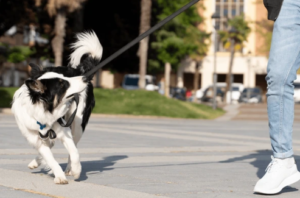
Dog lunging on leash during walk in downtown Boise

Boise leash reactivity training is more important than most dog owners realize. For example, many pups seem calm at home but turn into a barking, lunging ball of energy once the leash goes on. As a result, daily walks become stressful rather than enjoyable. If that sounds familiar, you’re not alone — leash reactivity is one of the most misunderstood behavior issues in Boise.

What Is Leash Reactivity in Dogs?

Leash reactivity happens when a dog overreacts to a trigger while on a leash — such as other dogs, people, or even cars. Typically, it can look like:

  • Barking or growling
  • Lunging or pulling
  • Whining or freezing
  • Tail tucking or hackles raised

These behaviors are often rooted in fear, frustration, or a lack of socialization. However, unlike off-leash interactions, dogs on a leash feel trapped, which can dramatically increase their stress.

Why Boise Dogs Need Leash Reactivity Training

In Boise, we love our outdoor lifestyle — and that means your dog encounters a variety of triggers on every walk. Because of that, even a short stroll can feel overwhelming for an under-socialized or untrained pup. For instance, crowded trails, cyclists, and other dogs behind fences can quickly raise anxiety levels.

Key local factors include:

  • Close proximity to other dogs in parks like Ann Morrison Park or the Boise Greenbelt
  • High foot traffic in Boise’s popular dog-friendly areas
  • Owners unknowingly reinforcing bad habits by pulling the leash or reacting nervously

As a result, your dog starts to associate walks with conflict or overstimulation. Therefore, the behavior worsens over time if not addressed properly.

Common Causes of Leash Reactivity in Boise Dogs

Leash reactivity isn’t about dominance or control. Instead, it’s usually a stress response that builds over time. Let’s look at a few common causes:

  • Frustration: Your dog wants to interact but can’t, which builds tension.
  • Fear or anxiety: Often caused by a traumatic event or lack of proper socialization.
  • Learned behavior: When reactivity “works,” your dog repeats it.
  • Inconsistent training: Without a clear structure, dogs struggle to make good decisions under pressure.
  • For a deeper understanding, check out this AKC article on leash aggression. It breaks down the psychology behind leash-based behaviors.

Boise Leash Reactivity Training: How to Fix the Problem

Thankfully, leash reactivity can be improved with the right plan. However, it’s not just about stopping barking — it’s about replacing bad habits with calm, confident behavior. That’s why a structured program like Board & Train can provide the consistency and clarity your dog needs.

Proven Techniques for Reactive Dog Training

Here’s what works best:

  • Neutral exposure: Gradually introducing triggers in a controlled, positive way
  • Clear commands: Teaching your dog exactly what to do in stressful situations
  • Desensitization: Slowly reducing reactivity by creating new associations
  • Owner training: Showing you how to read your dog’s body language and intervene calmly

If you’re starting with a puppy, Puppy Training is essential. Early socialization and structure can prevent reactivity before it starts. In fact, many leash problems are completely avoidable with proper puppy guidance.

With professional Boise leash reactivity training, your walks can become calm, controlled, and enjoyable again. Even if your dog has been reactive for years, improvement is possible with the right tools.

Signs You Need Professional Dog Leash Behavior Training

Not all dogs need professional help — but some clearly do. For example, if your dog is pulling to the point of choking or lunging unpredictably, it’s time to bring in a pro. In many cases, experienced trainers can resolve behaviors faster and more safely than DIY methods.

You should consider help if:

  • Your dog’s reactivity is getting worse over time
  • You’ve tried online tips but nothing is improving
  • You feel anxious every time you grab the leash
  • Your dog’s outbursts are putting others at risk

Because your relationship with your dog matters, investing in expert help can make a life-changing difference. Therefore, if you’re ready to regain control and peace of mind, Contact Us today.


FAQ

What is leash reactivity in dogs?
Leash reactivity is when a dog overreacts to triggers like people, dogs, or bikes while on a leash. It often looks like barking or lunging.

Why is leash reactivity common in Boise?
Because Boise is full of dog-friendly spaces, pups are exposed to more triggers than in quieter areas. Without training, that can lead to overstimulation.

Can leash reactivity be cured?
Yes. While it takes time and consistency, leash reactivity can be significantly reduced — or even eliminated — with the right training.

Is a Board & Train program good for leash reactive dogs?
Absolutely. A Board & Train provides focused, immersive training that helps dogs reset and relearn calm behaviors.

Can puppy training prevent leash reactivity?
Yes — starting with Puppy Training lays the groundwork for confident leash behavior and reduces future problems.

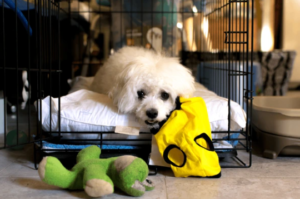
Calm dog resting inside crate at Boise home during crate training

Crate training in Boise is a game-changer for dog owners who want to build trust, reduce anxiety, and prevent unwanted behaviors. With the right approach, your dog’s crate becomes a calm, comforting space — not a punishment. Whether you have a puppy, rescue, or adult dog, this guide will help you get started the right way.


Why Crate Training in Boise Works So Well

Crate training in Boise gives your dog structure and security — especially important during transitions, training, or housebreaking. It helps with:

  • Teaching potty habits and independence
  • Creating a safe space for your dog to relax
  • Preventing destructive behavior when you’re not home

In addition, crate training encourages routine and provides your dog with a place to self-soothe when feeling anxious.

Dogs naturally seek cozy, den-like spaces. Therefore, when introduced properly, a crate becomes your dog’s go-to retreat.

How to Make the Crate a Positive Space

Step 1: Set Up the Crate for Success

Your dog’s environment matters. To make the crate inviting:

  • Add a soft, washable blanket or bed
  • Place the crate in a quiet area of your home
  • Keep the door open during the first few days

However, you should avoid isolating the crate in loud or busy rooms — calm areas help build comfort more quickly.

Step 2: Associate the Crate with Positive Experiences

Your dog should associate the crate with rewards and fun. For example:

  • Feed meals inside the crate
  • Offer puzzle toys or frozen treats
  • Praise calm behavior with gentle voice and rewards

Begin with short sessions and gradually increase the time. As a result, your dog will soon feel relaxed in their new space.

Looking for expert tips? The AKC’s crate training guide breaks down every step.

Common Crate Training Mistakes to Avoid

Even with the best intentions, dog owners may hit a few bumps. For instance:

  • Crying or barking when the door closes
  • Reluctance to enter the crate
  • Accidents inside the crate

These signs suggest it’s time to slow down the process. Instead of forcing your dog, add higher-value rewards or reduce the session length.

Meanwhile, if the issues continue, professional guidance may be necessary. Our Board & Train program can accelerate progress with hands-on support.

Is Crate Training Right for All Dogs?

Yes — crate training in Boise works for every type of dog:

  • Puppies learning house manners
  • Adult dogs needing structure
  • Rescues adjusting to new homes

As long as you’re consistent, any dog can succeed. Additionally, we tailor our Board & Train program to your dog’s age, behavior, and needs.


When to Contact a Boise Dog Trainer

Sometimes, crate training brings unexpected challenges. In that case, a customized training plan may be best.

Our Boise dog trainers know how to adjust crate routines for different temperaments. Therefore, if you feel stuck, professional help can make all the difference.

Contact Us today to learn how we can support your dog’s progress — crate training and beyond.


Ready to see real results? Board & Train and get your dog on the path to success.


FAQ

Q: How long does crate training in Boise typically take?
Most dogs adapt in 1–4 weeks with consistent, calm reinforcement. However, puppies may need a bit more time.

Q: Is it safe to crate train older dogs?
Yes! With patience and the right approach, older dogs can learn to love their crate just like puppies.

Q: Should I crate my dog while I’m at home?
Yes. In fact, this normalizes the crate and helps your dog see it as a regular, safe space — not just for when you’re away.

Q: What should I do if my dog whines in the crate?
Avoid opening the crate immediately. Instead, wait for quiet and then reward the calm behavior.

Q: Can crate training help with separation anxiety?
Absolutely. As a result of proper crate training, your dog can feel more secure and relaxed when left alone.

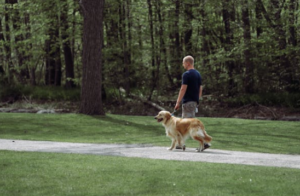
Golden Retriever walking politely on a leash beside owner in a sunny Boise park trail

Enjoy Better Walks with Your Dog in Boise

Boise dog leash pulling is one of the most common frustrations for local dog owners, especially during daily neighborhood walks. However, Boise dog leash pulling can be corrected with the right training approach and consistency. Most dogs pull because it’s been unintentionally rewarded — not because they’re stubborn or disobedient. Fortunately, with the right training approach, you can teach your dog to walk calmly beside you and enjoy stress-free walks again.


Why Boise Dog Leash Pulling Happens

Dogs aren’t trying to misbehave when they pull. In fact, they’re simply excited, curious, and naturally driven to explore their environment.

Here’s why leash pulling is so common:

  • Pulling gets results — it moves them toward smells, sights, and other dogs.

  • Lack of leash training — they’ve never learned what’s expected of them.

  • Reinforced behavior — every time pulling gets them closer to something fun, it’s rewarded.

  • No boundaries — tools like retractable leashes often make pulling even worse.

As a result, without clear rules and consistent responses, dogs will continue to repeat what works — pulling forward. Therefore, it’s essential to address the behavior early.

Common Mistakes That Reinforce Boise Dog Leash Pulling

Dog owners often make small missteps that unintentionally teach leash pulling. If you’ve done any of these, you’re not alone. However, it’s time to shift the pattern and regain control of your walks.

Avoid these leash walking mistakes:

  • Letting your dog lead the entire walk

  • Using a retractable leash that encourages tension

  • Continuing to walk when the leash is tight

  • Pulling or yanking back, which can escalate excitement

  • Skipping training in low-distraction environments

Ultimately, without structured feedback and boundaries, dogs default to what’s most exciting — and that usually means pulling ahead. Thankfully, this can be corrected with the right strategy.

How Dog Trainers in Boise Fix Leash Pulling Behavior

At All Dogs Unleashed Boise, we use a reward-based, real-world approach to help dogs learn polite leash behavior. Whether you’re in our Board & Train program or private lessons, we focus on consistent communication, positive reinforcement, and clear expectations.

Our proven leash training method includes:

1. Setting a Clear Walking Cue

First, we teach dogs verbal commands like “heel” or “let’s go” so they understand where you want them. This helps create structure from the very beginning.

2. Stopping When They Pull

Next, when the leash tightens, we immediately stop moving. As a result, dogs quickly learn that pulling leads to nothing — but a loose leash allows the walk to continue. This pattern helps them rethink their behavior.

3. Rewarding the Right Behavior

Additionally, we use treats, praise, or toys to reward your dog for walking calmly beside you. Because reinforcement is key, consistent praise builds the right habits and encourages repeatable success.

4. Practicing Around Distractions

Finally, we build up slowly — starting in quiet spaces and then gradually practicing in busier Boise parks and neighborhoods. That way, your dog gains confidence in various real-world scenarios.

Quick Tips for Better Leash Manners

If you want to start making progress today, try these quick leash training tips at home:

  • Use a 4–6 ft standard leash (not retractable)

  • Start with short, focused walks in a quiet area

  • Stop every time the leash gets tight — wait for slack

  • Mark and reward your dog for walking by your side

  • Gradually introduce distractions as they improve

For more help, check out these expert leash tips from the AKC.

Although leash training takes patience, your consistency will pay off in the long run. In the end, your dog will learn that calm walking leads to fun — not pulling. Furthermore, you’ll feel more in control and less frustrated every time you walk out the door.


Make Walks in Boise Enjoyable Again

From the Boise Greenbelt to your neighborhood sidewalks, leash manners make every walk safer and more enjoyable. If you’re struggling with leash pulling, our expert team can help.

Moreover, we offer solutions that fit your schedule, lifestyle, and your dog’s unique personality. Explore our customized training options, including Board & Train, and don’t hesitate to Contact Us to start your dog’s transformation.

When Boise dog leash pulling is addressed correctly, walks become calmer, safer, and more enjoyable for both you and your dog.

Ready to see real results? Board & Train and get your dog on the path to success.


FAQ

Why does my dog pull on the leash?
Dogs pull because it gets them closer to something exciting — like a smell, a person, or another dog. It’s unintentionally rewarded behavior, but it can be unlearned.

Can leash pulling be corrected?
Yes! With consistent training, patience, and clear communication, most dogs can learn to walk calmly on a loose leash. Additionally, early intervention makes correction easier.

Should I use a harness or collar for leash pulling?
A no-pull harness can help manage pulling. However, it won’t fix the behavior alone. Therefore, training is essential for lasting success.

How long does leash training take?
Every dog is different. However, with daily practice and proper technique, you may see improvement in as little as a few weeks. It depends on consistency and commitment.

Is Board & Train effective for leash pulling?
Absolutely. Our Board & Train program provides immersive training to build reliable leash skills in real-world environments. Plus, it gives your dog a structured, distraction-controlled setting to learn faster.

Happy dog crate training in Boise living room

Boise Dog Crate Training: What It Is and Why It Matters

Crate training Boise dogs is one of the most effective ways to create a peaceful home and a confident, happy pet. When introduced the right way, a crate becomes your pup’s safe haven—a place where they can relax, unwind, and feel secure. As a result, crates help dogs learn boundaries, ease anxiety, and fit into your home routine with confidence.

In fact, a well‑implemented crate routine supports:

  • Calm behavior whether you’re home or away

  • Easier housebreaking, especially for puppies

  • Reduced destructive habits throughout the day

  • Better sleep patterns at night

  • Safe structure for travel, vet visits, or new environments

How to Make the Crate a Safe, Comfortable Space

Creating a Positive Crate Environment for Boise Dogs

To begin with, the secret to success is using positive, not punitive crate training techniques.

Here’s how to start:

  • First, place treats or your dog’s favorite toy inside

  • Next, keep the crate door open so your dog can explore freely

  • Then, feed meals inside the crate to create a strong, happy association

Over time, these gentle steps help your dog see the crate as a place they choose to be—rather than something they’re forced into.

Step-by-Step Crate Training for Dogs in Boise Homes

To encourage relaxation, make the crate as inviting as possible by adding:

  • A soft blanket or comfortable dog bed

  • A durable chew toy or safe comfort item

  • A quiet location where your dog still feels part of the family setting

Above all, comfort is key—especially for dogs who may feel nervous in confined spaces.

For best results, follow this gradual, rewarding process:

  1. Explore First: Initially, let your dog sniff and enter the crate at their own pace.

  2. Use Treats & Praise: As they enter voluntarily, reward them with treats and gentle praise.

  3. Short Sessions: At first, keep crate time brief, and then slowly increase the duration.

  4. Add Mealtime: Eventually, feeding meals inside the crate will reinforce positive feelings.

  5. Close Door Briefly: Once your dog is relaxed inside, close the door for short, peaceful intervals.

  6. Increase Routine: Gradually add crate time throughout your dog’s daily schedule to build comfort.

For additional expert tips, check out the AKC crate training guide.

By staying consistent and patient, you’ll make the crate a predictable, reassuring space your dog looks forward to.

Common Crate Training Mistakes Boise Dog Owners Should Avoid

Even with the best intentions, avoid these common missteps to ensure your dog’s success:

  • Using the crate as punishment — This can create fear instead of comfort

  • Rushing the introduction — If you close the door too soon, your dog may resist the crate

  • Leaving your dog crated too long — Dogs need regular movement, interaction, and stimulation

Ultimately, the goal is a peaceful home where the crate feels like a home base—not a place of isolation.

Why Crate Training Works for Puppies and Adult Dogs in Boise

Whether you’re working with a brand-new puppy or an adopted adult dog, it’s never too late to introduce crate training.

With the right methods, dogs of all ages can:

  • Quickly feel secure in a new daily routine

  • Effectively manage separation anxiety

  • Comfortably enjoy rest time when life gets busy


Get Help Crate Training Your Dog in Boise with Our Expert Trainers

At All Dogs Unleashed Boise, we carefully build crate training into a well-rounded plan that fits your dog’s lifestyle and personality. In addition to the basics, we help you with setup, schedule, and long‑term success.

If you’re ready for expert help, check out our Board & Train program or Contact Us to get started.


FAQ

Q: Is crate training dogs in Boise effective for all breeds?
A: Yes. Crate training works well for all breeds when introduced positively and with patience. Every dog can learn to love their crate as a safe space.

Q: How long does it take to crate train a dog in Boise?
A: Most dogs adjust within 1–3 weeks, but timing depends on age, temperament, and consistency. Puppies may adapt faster with daily routine and structure.

Q: Should I crate train my dog at night?
A: Yes. Crating your dog at night can help with sleep routines and house training. Just make sure the crate is comfortable and nearby for reassurance.

Q: Can professional trainers help with crate training in Boise?
A: Absolutely. Our Board & Train program includes expert crate training support tailored to your dog’s needs.

Q: What if my dog cries in the crate?
A: Some dogs cry early on. Avoid letting them out immediately to prevent reinforcing the behavior. Instead, use calming routines, treats, and gradual desensitization.

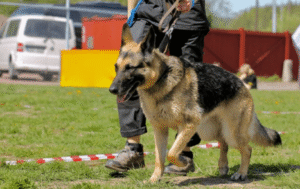
Dog trainer working on behavior correction with German Shepherd in Boise park

If you’re searching for Boise dog behavior correction that actually works, you’re not alone. Many local dog owners struggle with unwanted habits like barking, pulling, or anxiety. Fortunately, our proven training programs at All Dogs Unleashed Boise are designed to help.

Why Boise Dog Behavior Correction Works

Obedience training isn’t just about teaching your dog to “sit” or “stay.” Instead, it’s about creating communication, setting clear boundaries, and giving your dog the tools to thrive in everyday life. As a result, you’ll experience less stress, more enjoyable walks, and better quality time together.

With consistent structure and guidance, Boise dog behavior correction helps dogs understand boundaries, communicate better, and respond calmly to distractions. This leads to more enjoyable walks, fewer incidents at home, and a stronger bond between you and your dog.


Boise Dog Behavior Correction for 6 Common Problems

Here are six common issues we tackle in our Boise dog obedience training, and how we approach each one.

1. Basic Obedience and Behavior Correction

We teach dogs to master foundational commands like sit, stay, down, and come—even off‑leash. When your dog responds reliably, they stay safer in parks, yards, and everyday outings. Moreover, we educate both your dog and you, so you can maintain that behavior when you’re at home.

2. Leash Pulling and Walking Behavior Fixes

Dragging a leash or being jumped all over can ruin a walk. In a place like Boise, where we enjoy dog‑friendly trails and parks, a well‑mannered walk makes a big difference. That’s why our training helps your dog walk calmly at your side so your outings are pleasant again.

3. Jumping Up and Correcting Excited Behavior

It’s natural for dogs to get excited—but jumping up on people is risky and disruptive. Even more so, small dogs can startle a visitor or knock someone off‑balance. To prevent this, we teach better greeting behavior so your dog can be friendly without being over the top.

4. Barking and Boise Behavior Correction Strategies

Some barking is fine—it can alert you to someone approaching. However, constant barking from boredom or anxiety affects everyone. Therefore, we work with your dog to reduce nuisance barking and give you strategies to manage the situation. In turn, less barking means happier neighbors and a calmer home environment.

5. Dog Aggression and Boise Dog Behavior Correction

Dogs can show serious aggression toward people, other dogs, food, or toys—making it one of the hardest behaviors to fix. Sadly, many owners surrender aggressive dogs to shelters when they don’t know what else to do.
In some cases, we offer immersive training (e.g., a boarding‑style program) when needed to redirect behaviour safely. For additional insight, the ASPCA offers guidance on handling behavioral issues.

6. Behavior Correction for Separation Anxiety

When your dog panics at your departure—destroying things, barking, refusing to eat—that’s a stress on both of you. Our Boise obedience training gives you tools to help your dog feel secure and stay calm when you’re away.


How Our Boise Dog Behavior Correction Program Works

  • First, we start with an assessment: what your dog currently does, what you want to achieve, and any special concerns (breed, age, history).

  • Then, we build a plan tailored to your goals—whether that’s in‑home lessons or an immersive board‑and‑train program.

  • Next, you get the skills and confidence to keep your dog’s behaviour strong long‑term.

  • Finally, we partner with you every step of the way—because return‑visits matter, and the best results show up when you’re consistent.


Why Choose Our Dog Behavior Correction in Boise

  • Local expertise in the Boise / Treasure Valley dog culture and environment.

  • Friendly but professional approach—you’ll feel supported, not judged.

  • Proven methods that focus on both the dog and you, the owner.

  • We don’t just fix behavior—we build relationships.

  • Ideal for new puppies, rescue dogs, or lifelong companions.


Getting Started Today

If you’re ready to see a big shift in your dog’s behavior, we invite you to Contact Us and we’ll chat about your dog’s specific needs.
Let’s work together so your dog becomes the calm, joyful companion you always hoped for.

Don’t wait to get started with Boise dog behavior correction that delivers real results. Contact Us today to schedule your free consultation and take the first step toward lasting change.

Ready to see real results? Board & Train and get your dog on the path to success.


FAQs

Q: How quickly can I expect results from obedience training?
A: Every dog is different. Some begin to respond in a few sessions; others with deeper issues may take weeks of consistent work. With our program though, most owners report noticeable improvement within the first month.

Q: Is obedience training only for puppies?
A: Absolutely not. Whether you have a puppy, adult dog, or senior companion, behaviors can be improved. Our methods are designed for dogs of all ages and breeds.

Q: What if my dog has severe behavioral issues like aggression or intense fear?
A: For significant issues we may recommend our more intensive model where the dog stays with a trainer for a period of time. We’ll evaluate your dog’s needs and select the right program accordingly.

Q: Do I have to commit to a long program?
A: No. We build the plan that fits your budget, schedule, and goals. We also give you the tools so you can maintain good behavior long‑term.

Q: Can you train in‑home or do I need to come to you?
A: We offer both in‑home sessions and structured programs. We’ll talk through what works best for you and your dog.