


Boise dog leash training at local park

Why Your Dog Acts Out — And How Boise Dog Behavioral Training Helps

Boise dog behavioral training starts with understanding why unwanted behaviors occur. Contrary to common belief, dogs don’t “misbehave” to annoy us — rather, they’re communicating a need or confusion. Often, common issues like leash pulling, excessive barking, separation anxiety, and jumping stem from stress, lack of mental stimulation, or unclear communication. (ASPCA)

When you view behavior as communication, you can begin to apply the right techniques to help your dog succeed. With expert guidance and consistent practice, Boise dog behavioral training can transform your daily routines and build trust between you and your dog.

Common Behavioral Issues Solved Through Boise Dog Behavioral Training

1. Leash Pulling and Reactivity

• Many dogs pull because they’re excited or unsure about their surroundings. Therefore, it’s important to remain calm and consistent.
• To improve leash behavior, teach calm walking by rewarding the correct position and pausing when they pull.
• Additionally, short and frequent walks help build good habits over time.

2. How Boise Dog Owners Can Reduce Excessive Barking

• Barking becomes a problem when dogs are bored, anxious, or reacting to specific triggers.
• First, identify the trigger (such as people, other dogs, or noises), and then reward quiet behavior when your dog remains calm.
• Furthermore, consistency matters — everyone in the household should follow the same plan.

3. Stop Jumping With Local Behavioral Training for Dogs

• Jumping is often attention‑seeking behavior. However, it can be managed with clear boundaries.
• Always wait for all four paws to be on the ground before rewarding calm greetings.
• Moreover, practice with friends or family members who can help reinforce calm behavior consistently.

4. Boise Dog Behavioral Training for Separation Anxiety

• Dogs with separation anxiety can become destructive or vocal when left alone.
• To reduce this, gradually increase alone time using calming routines and enrichment toys.
• In more serious cases, Board & Train can help guide your dog through structured routines that reduce stress and build independence.

5. Addressing Aggression Through Behavioral Training in Boise

• Aggressive reactions often come from fear, lack of socialization, or over‑arousal.
• In these situations, seek structured training and gradual exposure to triggers for safety.
• Most importantly, controlled environments build confidence and help reduce stress over time.

Training Techniques That Power Boise Dog Behavioral Success

Build Clear Communication With Your Dog

Dogs thrive when they understand what’s expected. For this reason, short, consistent commands and positive reinforcement help your dog learn what behaviors earn rewards.

Reinforce Positive Behavior in Boise Dogs

Reward good behavior with treats, praise, or play. In doing so, you’ll encourage your dog to repeat the actions you want.
Additionally, modern training avoids punitive methods and instead focuses on motivation and trust.

Consistency is Key in Boise Dog Behavioral Training

Consistency across family members and situations sets clear boundaries. Otherwise, if one person allows a behavior and another doesn’t, the dog receives mixed signals and becomes confused.

Physical & Mental Enrichment for Behavior Control

A tired dog is often a well‑behaved dog. Therefore, regular walks, play sessions, and puzzle toys help reduce unwanted behaviors linked to excess energy.

When to Seek Professional Boise Dog Behavioral Help

Some behaviors benefit from guided training plans tailored to your dog’s personality and needs. If you find that progress is slow or behaviors become dangerous (e.g., serious aggression), a professional trainer can provide structure and support.

At All Dogs Unleashed Boise, we help owners and dogs build strong communication and lasting behavioral success through proven methods and experienced guidance. Our Boise dog behavioral training services are trusted by families across the Treasure Valley. Have questions? Contact Us to get started.


FAQs

Q: What causes most dog behavior issues?
A: Many stem from unclear communication, lack of exercise or mental stimulation, and stress. Therefore, understanding the root cause helps guide effective training.

Q: Can I train my dog at home?
A: Yes — consistent practice, positive reinforcement, and daily routines help improve behavior. However, some challenges benefit from structured support.

Q: How long does training take?
A: Training timelines vary depending on the dog and the behavior. While small changes can occur in weeks, deeper habits may take months to change with consistency.

Q: Is punishment ever effective?
A: Negative or punitive methods may discourage dogs temporarily, but they don’t teach what to do instead. For better long‑term results, positive reinforcement is far more effective.

Q: My dog is aggressive — should I seek help?
A: Absolutely. Aggression can escalate and become dangerous. Therefore, a professional can assess causes and help you train safely.
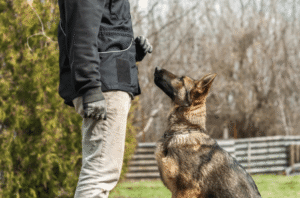
Boise dog trainer giving calm command to German Shepherd at local park

If you’re a Boise dog owner dealing with aggressive dog behavior, this guide will show you how training can help. Whether your dog has become fearful, defensive, or simply overwhelmed, we’ll walk you through the process of understanding the root causes. Additionally, we’ll show how professional training can provide a path to peace of mind.


What Causes Aggressive Dog Behavior in Boise Dogs?

Understanding what’s behind your dog’s aggression is the first step in resolving it. Several key factors often play a role:

1. Past Abuse or Neglect

Dogs with traumatic histories often develop aggressive behavior to protect themselves. For instance, a dog rescued from an abusive home may lash out to feel safe. As a result, building trust is essential.

2. Anxiety or Stress

Unmanaged stress can trigger aggressive behavior in dogs, especially after major life changes. Therefore, reducing stressors is a top priority.

3. Fear-Based Dog Aggression

Fear is one of the most common causes of aggressive dog behavior. In many cases, a frightened dog sees aggression as its only option. Consequently, exposure therapy with positive reinforcement can help.

4. Frustration and Confinement

“Barrier frustration” is a common source of reactivity and aggression. When dogs feel trapped, they may redirect their energy into aggressive outbursts. Thus, structured activity and space are key.

5. Breed-Driven Behavior

Some dogs have strong protective instincts that can appear aggressive without training. However, proper structure can help manage this natural drive.

6. Poor Socialization

Dogs that aren’t socialized early often react aggressively to new people or pets. Because of this, social exposure should begin as early as possible.

7. Learned Aggressive Behavior

Dogs sometimes repeat aggressive actions if they’ve learned it gets results. Therefore, consistent correction and redirection are critical.

Learn more about aggression in dogs from the AKC.

Boise Aggressive Dog Training: Rule Out Health Issues First

Before starting training, rule out medical causes that could influence aggressive dog behavior. Pain, hormonal imbalances, neurological issues or dietary factors may contribute to aggressive behavior. Therefore, it’s important to consult your veterinarian to ensure all health bases are covered. In turn, this helps training efforts succeed.

Effective Dog Training Options for Aggression in Boise

When aggression is severe, these solutions can help:

  • In-Home Training for Aggressive Dogs in Boise
    Work with your dog at home to manage their triggers in real-world settings. This approach keeps your dog in familiar surroundings and allows for real-time feedback.
  • Boise Dog Behavior Boot Camp for Aggression
    A structured stay with a trainer can help reset dangerous behavior patterns. As a result, your dog experiences consistent routines and expectations. In addition, your dog receives intensive support and socialization.

This level of training is intensive but often the best route when your dog is at risk of surrender or exclusion due to behavior. Ultimately, it offers your dog the best chance at lasting change.

Why You Need Professional Help for Aggressive Dogs

  • A trained behavior specialist gives your dog clear structure, consistent signals and safe exposure. In turn, your dog learns how to respond calmly and predictably.
  • You receive coaching so you can continue progress at home—training doesn’t stop when sessions end. Additionally, you gain tools that support long-term success.
  • You create an environment in your Boise home and community where your dog can be successful—less stress for everyone. For example, simple routines can help reduce triggers and anxiety.
  • You’ve taken proactive action, which can reduce the chance of escalation or irreversible consequences. Therefore, early training is often the best solution for aggressive behavior.

Need advice on which program is best for your dog? Contact Us and let’s talk through the right next step.


Final Thoughts on Treating Aggressive Dog Behavior in Boise

With the right support, you can transform even serious aggression into calm, obedient behavior. Every dog deserves the chance to live peacefully—and you deserve the confidence to enjoy your time together again. After all, a well-trained dog is a happy dog. Ultimately, the first step begins with action.

Ready to see real results? Board & Train and get your dog on the path to success.


FAQs About Aggressive Dog Training in Boise

How long does training take?
Most aggressive dogs show progress within 2–4 weeks with the right plan and consistency. However, follow-through is essential.

Can aggressive dogs really improve?
Yes. With structure and expert help, many aggressive dogs become safe, calm companions. In fact, most dogs just need clear guidance.

What types of aggression do you handle?
We address leash reactivity, fear, barrier frustration, and both dog and human-directed aggression. Additionally, we work with multi-dog households.

Is boot camp required?
Not always. Severity determines the plan—Contact Us to discuss your dog’s needs. We’ll guide you through the best option.

Should I try to fix it myself?
Aggression can be risky to handle alone. Therefore, professional guidance ensures safety and results. Instead of guessing, work with a pro who understands behavior.

Trainer working one-on-one with large dog at Boise dog training camp outdoors

If you’re facing persistent behavior issues with your dog, our Boise dog behavior training camp offers a highly effective solution. At All Dogs Unleashed Boise, we understand that the right immersive training can, in fact, make all the difference.

Why Choose a Boise Dog Training Camp Over Regular Lessons?

Typically, traditional lessons—where a trainer visits your home and you reinforce skills—are effective for many dogs.
However, for dogs with more serious challenges such as frequent aggression, escape behavior, or repeated destructive episodes, a Board & Train program delivers faster, deeper results.

In our camp setting:

  • First, your dog lives with a professional trainer 24/7 for several weeks.

  • Additionally, we offer consistent immersive training every day, not just one hour a week.

  • As a result, you’ll see significant progress in a shorter time because the environment is controlled and structured.

To better understand this approach, you can learn more about how board and train programs work via the AKC.

What Dog Behavior Issues Does Our Boise Camp Solve?

Specifically, our Boise dog behavior training camp tackles a wide range of issues, including:

  • Aggression toward people or other dogs — ideal for dogs that consistently growl, lunge, or bite.

  • Obedience failures — we train your dog to reliably sit, stay, come on command.

  • Anxiety and separation stress — for dogs that panic when left alone or exhibit signs of chronic worry.

  • Nuisance behaviors — such as leash pulling, excessive barking, jumping up, destroying furniture, or house‑soiling.

How Socialization Fits Into Boise Training Camp Success

Even though the primary focus is behavioral correction, we also use controlled socialization as part of the process. Since our trainers own dogs, your dog may engage with stable canine companions, which helps reshape how they interact with others in a safe and supervised setting.

Custom‑tailored programs, not one‑size‑fits‑all

Every dog is unique. Therefore, at our Boise facility, we begin with an assessment so we can design a program that meets your dog’s specific needs. That means:

  • Instead of a posted “package price,” cost depends on the dog’s issues and how long training takes.

  • You’ll receive a first lesson to evaluate your dog (often at a special introductory rate).

  • In addition, we provide ongoing support after camp finishes — because maintenance is key to long‑term success.

If you have questions or want to discuss your dog’s behavior, don’t hesitate to Contact Us.

Ready to see real results? Board & Train and get your dog on the path to success.


Frequently Asked Questions

What’s the difference between board and train and regular obedience classes?

Board and train programs are immersive, meaning your dog stays with a professional trainer for daily, around-the-clock training. In contrast, obedience classes typically occur once a week and require consistent at-home practice between sessions.

How do I know if my dog needs a training camp?

If your dog shows repeated aggression, anxiety, or serious disobedience that hasn’t improved with standard training, a structured camp program is often the most effective solution.

Will my dog forget us during the camp?

No. Your dog will remember you, and we actually use positive association techniques to ensure they’re excited to reunite with you—and better behaved when they do.

What happens after my dog comes home?

After camp, we provide hands-on training sessions with you to ensure the behaviors stick. You’ll receive clear instructions and support to maintain your dog’s progress at home.

Is board and train safe for my dog?

Yes. Our Board & Train program is designed with your dog’s safety, comfort, and emotional well-being in mind. Every dog is monitored closely, trained with positive reinforcement, and treated like family.