


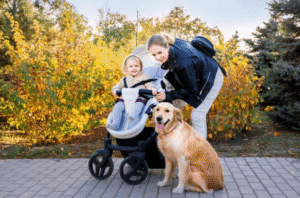
A friendly-looking Golden Retriever or Labrador sitting on leash beside a baby stroller with a parent nearby, set in a recognizable Boise park

Welcoming a new baby into your home is an exciting time — and the key is to prepare your dog ahead of arrival. If you’re looking for Boise dog training for new baby, these ten tips will give you a clear plan to help your four‑legged friend adjust smoothly before your little one comes home. To learn more, visit our About Us page.

1. Boise Dog Training Basics to Reinforce Before Baby Arrives

Before the baby arrives, be sure to reinforce essentials like “go,” “place,” and calm settling. As a result, your dog will better handle new dynamics in the home.

2. Desensitize with Baby Sounds in Boise Dog Training

To begin with, play recordings of baby noises at a low volume. Over time, increase the volume while your dog remains calm. Consequently, your dog will start getting used to unfamiliar sounds.

3. Baby-Proofing Tips for Dog Owners in Boise

As you bring in items like strollers and cribs, let your dog sniff and explore them. However, be clear about boundaries—no chewing baby toys or entering the nursery unsupervised.

4. Create a Safe Space During Boise Dog Training for New Baby

Even with excitement in the house, your dog needs a retreat. Therefore, a crate or designated bed becomes a comforting spot. In addition, this safe zone helps reduce anxiety.

5. Change Up the Routine

Since routines will shift once the baby arrives, begin adjusting walk times, feeding schedules, and play sessions now. That way, your dog can adapt gradually with less stress.

6. Use Baby‑Scented Items

For example, you can bring home a baby blanket or onesie before the baby arrives. Then, let your dog sniff it under supervision. This familiar scent helps your dog adjust more easily.

7. Practice Parenting Movements

Carry a doll wrapped in a blanket, and simulate movements like rocking or feeding. Meanwhile, have your dog practice staying calm nearby. Eventually, your dog will get used to your changed body language.

8. Exposure Around Children

If possible, safely introduce your dog to well-behaved children. As a result, they will become more comfortable with quick movements, unexpected noises, and shifting energy levels.

9. Keep the Arrival Calm and Neutral

On the day your baby comes home, make sure the environment is calm and controlled. Allow your dog to observe from a distance at first. Afterward, reward quiet, curious behavior.

10. Never Leave Dog and Baby Alone

Even if your dog is trustworthy, you should never leave them alone with the baby. Above all, supervision keeps everyone safe and reinforces that the baby’s space is respected. For additional tips, visit this AKC expert guide.

Embrace the Journey Ahead

Ultimately, preparing your dog for a new baby isn’t about perfection—it’s about consistency, patience, and love. With thoughtful training and a few adjustments, your home in the Boise area can become a calm, safe, and joyful space for both dog and baby.

Ready to see real results? Board & Train and get your dog on the path to success.

Need help from a local expert? Contact Us today to talk about your dog’s needs.


Frequently Asked Questions

How soon should I start training my dog before the baby arrives?
Begin at least 1–2 months before your due date. This gives your dog time to adjust gradually to new routines, sounds, and boundaries.

What baby items should I introduce my dog to in advance?
Start with cribs, strollers, toys, swings, and baby sounds. Let your dog sniff these while reinforcing calm behavior.

Should I change my dog’s daily routine now or after the baby arrives?
Adjust the routine before the baby arrives. Gradual changes help reduce stress and create stability.

What if my dog becomes jealous or anxious around the baby?
Give your dog structured time, rewards for calm behavior, and a designated safe space. If issues persist, consider professional Board & Train.

Can I include my dog in baby bonding activities?
Yes, when done safely. Include your dog in walks with the stroller or let them sit near during feedings—always supervised and calm.
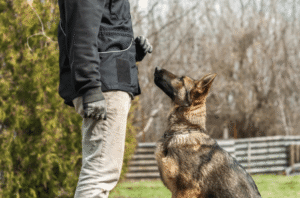
Boise dog trainer giving calm command to German Shepherd at local park

Training your dog well starts with guiding them confidently—and that’s exactly what Boise dog leadership training is all about. In this post, you’ll discover five actionable steps to become a more consistent, trusted leader for your dog—so your bond, your communication, and your home life all improve.

Why Leadership Matters in Boise Dog Training (Not Dominance)

To begin with, dogs don’t respond well to confusion or mixed signals. Instead, when they see you as consistent and clear, they feel safer and more willing to follow.
Importantly, leadership isn’t about dominance—it’s about providing structure, boundaries, and trust.

1. Provide Good Things from You — Building Trust Through Dog Leadership

First and foremost, make yourself the source of desired rewards:

  • For instance, give food, toys, and attention on your timing (not on demand)

  • Additionally, use hand feeding or controlled portions

  • Furthermore, bring out toys or start playtime—don’t let your dog initiate every interaction

As a result, your dog associates you with positive experiences and looks to you first. That’s the foundation of effective Boise dog leadership training.

2. Enforce Waits at Thresholds During Boise Dog Leadership Training

In daily life, doors, crates, and car exits are great leadership opportunities.
Before moving forward, ask your dog to sit, make eye contact, and wait.
This approach builds:

  • Impulse control, for better decision-making

  • Calm behavior, for peaceful outings

  • Clear expectations, for everyday routines

Board & Train programs can be especially helpful for teaching your dog these habits with the guidance of a professional trainer.

3. Advocate for Your Dog — Leadership Training with Compassion

In addition to teaching commands, leadership means protecting your dog—not pushing them into stress.

  • For example, know their triggers and comfort zone

  • Moreover, use tools (leash, muzzle) when needed

  • Lastly, manage their environment—avoid scenarios they’re not ready for

By doing so, your dog learns to trust that you “have their back,” which strengthens your relationship and reinforces dog leadership skills.

4. Be Consistent — The Core of Boise Dog Leadership Training

Consistency is key, especially in leadership.

  • Therefore, set clear rules and stick to them

  • In addition, use the same commands and expectations every time

  • Most importantly, avoid changing rules based on mood

With this in mind, your dog will thrive when your expectations remain stable.
Every great Boise dog leadership training plan starts with consistency.

5. Meet Their Needs Fully with Leadership Training for Dogs

To truly lead, a well-led dog is also a fulfilled dog.

  • Physically, provide daily walks, play, or hiking

  • Mentally, try puzzle toys, scent games, or basic training

  • Training-wise, aim for short sessions throughout the day and include real-life practice

Incorporating daily routines that align with Boise dog leadership training principles ensures your dog’s physical and mental needs are fully met.

For additional strategies, check out these 12 useful dog training tips from the AKC.

Ultimately, when their physical and mental needs are met, your dog will become calmer, more responsive, and balanced.

Final Thoughts: Why Boise Dog Leadership Training Strengthens Your Bond

In summary, by supplying structure, consistency, compassion, and support, you become not just a leader—but a trusted partner.
Consequently, dogs that understand their place in a caring, clear hierarchy are more confident, calmer, and more cooperative.

When practiced consistently, Boise dog leadership training leads to calmer behavior, better communication, and a happier home environment for both you and your dog.

Ready to see real results? Board & Train and get your dog on the path to success.

Need help getting started? Contact Us today to learn how we can help guide your dog toward better behavior.


FAQ

Q: What’s the difference between leadership and dominance?
A: Leadership is about structure, trust, and guidance. Dominance, on the other hand, tries to assert control through force or fear, which can harm trust.

Q: How long until I see a change in my dog?
A: You may notice small behavior shifts within days. However, significant, lasting change may take weeks or months of consistent habits.

Q: Can I use these tips if I have a puppy?
A: Absolutely. In fact, these leadership foundations are even more powerful with puppies, shaping lifelong healthy behaviors.

Q: What if my dog resists thresholds like door waits?
A: Start gradually—practice waits in a low‑distraction space. Then, reward small improvements and build confidence over time.