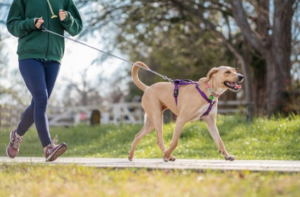


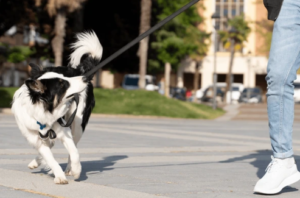
Boise leash reactivity training is more important than most dog owners realize. For example, many pups seem calm at home but turn into a barking, lunging ball of energy once the leash goes on. As a result, daily walks become stressful rather than enjoyable. If that sounds familiar, you’re not alone — leash reactivity is one of the most misunderstood behavior issues in Boise.
What Is Leash Reactivity in Dogs?
Leash reactivity happens when a dog overreacts to a trigger while on a leash — such as other dogs, people, or even cars. Typically, it can look like:
- Barking or growling
- Lunging or pulling
- Whining or freezing
- Tail tucking or hackles raised
These behaviors are often rooted in fear, frustration, or a lack of socialization. However, unlike off-leash interactions, dogs on a leash feel trapped, which can dramatically increase their stress.
Why Boise Dogs Need Leash Reactivity Training
In Boise, we love our outdoor lifestyle — and that means your dog encounters a variety of triggers on every walk. Because of that, even a short stroll can feel overwhelming for an under-socialized or untrained pup. For instance, crowded trails, cyclists, and other dogs behind fences can quickly raise anxiety levels.
Key local factors include:
- Close proximity to other dogs in parks like Ann Morrison Park or the Boise Greenbelt
- High foot traffic in Boise’s popular dog-friendly areas
- Owners unknowingly reinforcing bad habits by pulling the leash or reacting nervously
As a result, your dog starts to associate walks with conflict or overstimulation. Therefore, the behavior worsens over time if not addressed properly.
Common Causes of Leash Reactivity in Boise Dogs
Leash reactivity isn’t about dominance or control. Instead, it’s usually a stress response that builds over time. Let’s look at a few common causes:
- Frustration: Your dog wants to interact but can’t, which builds tension.
- Fear or anxiety: Often caused by a traumatic event or lack of proper socialization.
- Learned behavior: When reactivity “works,” your dog repeats it.
- Inconsistent training: Without a clear structure, dogs struggle to make good decisions under pressure.
- For a deeper understanding, check out this AKC article on leash aggression. It breaks down the psychology behind leash-based behaviors.
Boise Leash Reactivity Training: How to Fix the Problem
Thankfully, leash reactivity can be improved with the right plan. However, it’s not just about stopping barking — it’s about replacing bad habits with calm, confident behavior. That’s why a structured program like Board & Train can provide the consistency and clarity your dog needs.
Proven Techniques for Reactive Dog Training
Here’s what works best:
- Neutral exposure: Gradually introducing triggers in a controlled, positive way
- Clear commands: Teaching your dog exactly what to do in stressful situations
- Desensitization: Slowly reducing reactivity by creating new associations
- Owner training: Showing you how to read your dog’s body language and intervene calmly
If you’re starting with a puppy, Puppy Training is essential. Early socialization and structure can prevent reactivity before it starts. In fact, many leash problems are completely avoidable with proper puppy guidance.
With professional Boise leash reactivity training, your walks can become calm, controlled, and enjoyable again. Even if your dog has been reactive for years, improvement is possible with the right tools.
Signs You Need Professional Dog Leash Behavior Training
Not all dogs need professional help — but some clearly do. For example, if your dog is pulling to the point of choking or lunging unpredictably, it’s time to bring in a pro. In many cases, experienced trainers can resolve behaviors faster and more safely than DIY methods.
You should consider help if:
- Your dog’s reactivity is getting worse over time
- You’ve tried online tips but nothing is improving
- You feel anxious every time you grab the leash
- Your dog’s outbursts are putting others at risk
Because your relationship with your dog matters, investing in expert help can make a life-changing difference. Therefore, if you’re ready to regain control and peace of mind, Contact Us today.
FAQ
What is leash reactivity in dogs?
Leash reactivity is when a dog overreacts to triggers like people, dogs, or bikes while on a leash. It often looks like barking or lunging.
Why is leash reactivity common in Boise?
Because Boise is full of dog-friendly spaces, pups are exposed to more triggers than in quieter areas. Without training, that can lead to overstimulation.
Can leash reactivity be cured?
Yes. While it takes time and consistency, leash reactivity can be significantly reduced — or even eliminated — with the right training.
Is a Board & Train program good for leash reactive dogs?
Absolutely. A Board & Train provides focused, immersive training that helps dogs reset and relearn calm behaviors.
Can puppy training prevent leash reactivity?
Yes — starting with Puppy Training lays the groundwork for confident leash behavior and reduces future problems.